 My Plumbing Tech
Switchgear in Commercial Buildings: Essential Guide for Plumbing-Adjacent Systems
Quick Answers for Property & Facility Managers
What is switchgear in a commercial building, and why should facility managers care?
Switchgear is an assembly of electrical disconnect switches, fuses and circuit breakers used to control, protect and isolate power distribution equipment.[3][4] For facility managers, it’s the core protection for pumps, water heaters, lift stations and controls—critical to preventing outages, equipment damage and unsafe conditions.
How does switchgear affect commercial plumbing systems and building operations?
Switchgear protects and controls the electrical feeders serving booster pumps, sump and lift stations, commercial water heaters, grease interceptors and backflow prevention controls.[3][4] Properly rated and maintained gear reduces nuisance trips, flooding risk, scalding events, and unplanned downtime across offices, retail, healthcare and industrial facilities.
When should a property manager consider repair versus full replacement of switchgear?
Repair is appropriate for isolated breaker or control failures in otherwise code-compliant switchgear.[3][4] Replacement should be considered when equipment is obsolete, exceeds available fault ratings, can’t support current loads, or shows systemic deterioration that threatens safety, uptime or compliance.
Understanding Switchgear and Its Role in Commercial Building Systems
In commercial properties, switchgear is the heart of electrical power distribution and directly determines the reliability of every powered plumbing system in the building. The NEC describes switchgear as a completely enclosed sheet-metal assembly containing power circuit switching and interrupting devices (such as circuit breakers and disconnects), plus buses and connections, with access via doors or covers.[4] Modern medium-voltage switchgear is a centralized collection of circuit breakers, fuses and switches designed to protect, control and isolate electrical equipment.[1][3]
Switchgear’s primary function is protection: it interrupts short-circuit and overload currents while maintaining service to unaffected circuits.[3] In practice, this means your switchgear is what keeps a failed pump, heater or motor from taking down the entire building or causing dangerous electrical faults. Switchgear can be low-voltage (typically up to 600 V) or medium-voltage (up to tens of kilovolts), with current ratings up to thousands of amperes.[2][4] In many commercial buildings, the main service switchgear feeds switchboards and panelboards that, in turn, serve mechanical rooms, pump rooms and major plumbing-related systems.
For property and facility managers, understanding the capacity, condition and configuration of your switchgear is essential to planning plumbing upgrades, preventing outages and aligning with safety and code requirements.
How Switchgear Interfaces with Key Plumbing-Related Systems
While switchgear is an electrical asset, it governs the uptime of many critical plumbing and mechanical systems in offices, retail centers, healthcare facilities, warehouses and multifamily buildings. Core interfaces include:
- Drain & sewer pumps: Sump, lift station and sewage ejector pumps depend on reliable power from switchgear-fed distribution. Proper protection and coordination help avoid nuisance trips that can lead to flooding or sanitary backups.
- Water supply and booster pumps: Domestic and process water booster sets rely on correctly sized feeders and protective devices. Underrated or poorly coordinated switchgear can cause pump motor damage or prevent pumps from starting under load.
- Commercial water heaters and tankless systems: Electric commercial and hybrid systems often have large current draws. Switchgear with adequate voltage and current ratings, plus proper fault interruption capability, is essential to safe operation.[2][4]
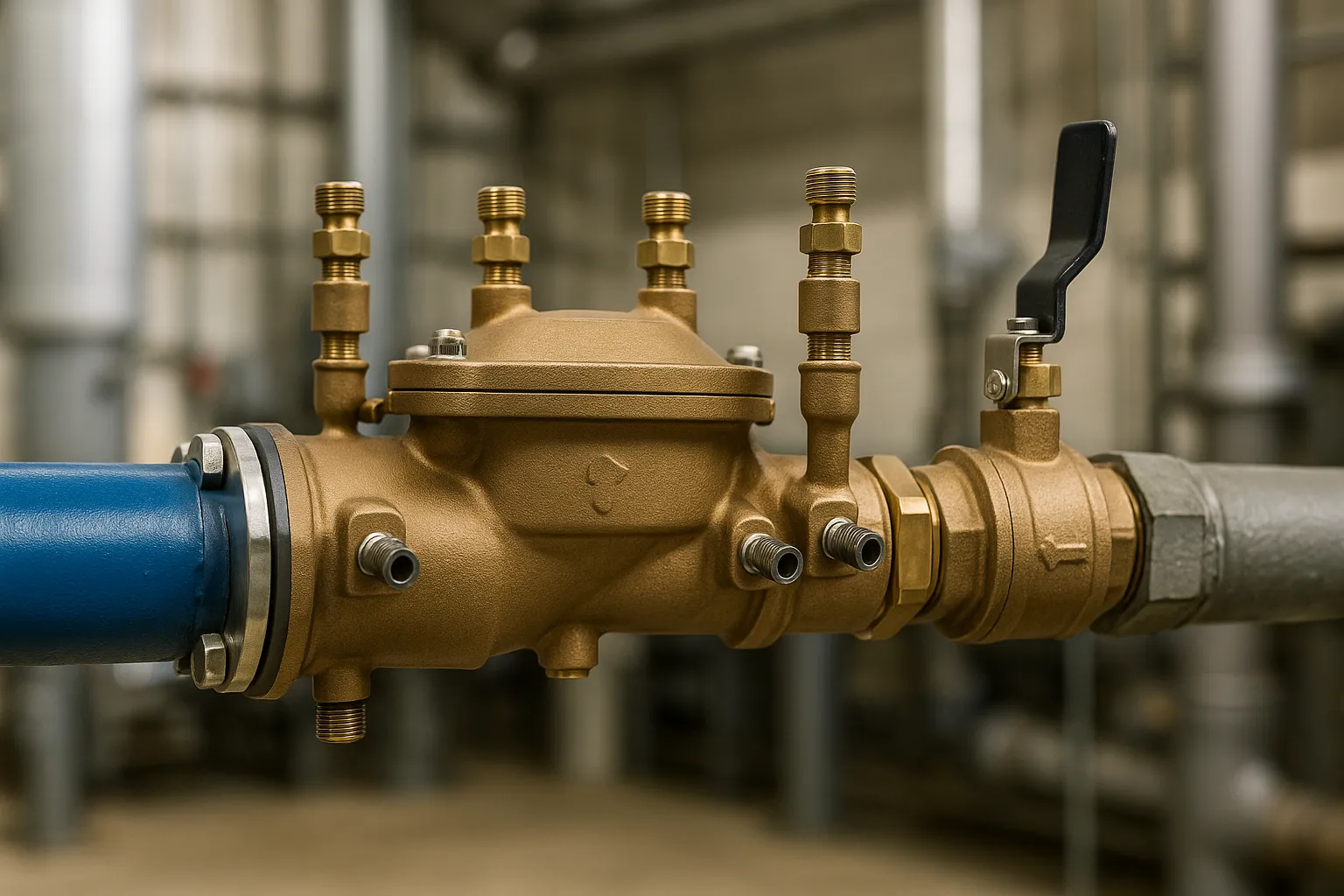
- Backflow prevention systems: While backflow preventers themselves are mechanical, related monitoring, alarms, and control valves are powered from electrical panels fed by switchgear. Stable power supports reliable compliance monitoring.
- Grease interceptors and pretreatment systems: In food-service and healthcare, pumped interceptors and automated dosing/monitoring systems depend on reliable power supply from switchgear-protected circuits.
- Gas piping safety and controls: Gas detection, emergency shutoff valves and control panels are often fed from critical circuits. Coordinated switchgear protection helps ensure these safety systems remain energized when needed, while allowing isolation during faults.
Because switchgear can be rated up to 38 kV and 6,000 A,[4] it frequently serves large chiller plants, process loads and central hot water plants in large campuses. Any significant change to plumbing or mechanical equipment—larger pumps, new heat pump water heaters, or added lift stations—must be evaluated against existing switchgear capacity and fault ratings.
Step-by-Step Assessment: Switchgear Risks and Opportunities in Your Portfolio
Property and facility managers should treat switchgear assessment as part of any major plumbing or mechanical project. A structured process helps align risk, cost and future flexibility.
1. Document Existing Switchgear and Distribution
- Gather one-line diagrams, panel schedules and equipment nameplate data for switchgear, switchboards and panelboards.[4]
- Identify voltage class (e.g., up to 600 V for many systems), bus ratings (in amperes) and fault duty ratings.[2][4]
- Map which plumbing-related loads (pumps, heaters, lift stations) are fed from each section of switchgear and downstream gear.
2. Evaluate Critical Loads and Redundancy
- List mission-critical systems: fire pumps, domestic booster pumps, medical facility hot water, sewage ejectors for below-grade levels.
- Determine if they are served from appropriately protected feeders with coordinated breakers.
- Check if redundancy exists (dual feeds, backup generators, ATS) and how switchgear interacts with these systems.
3. Review Condition, Age and Compliance
- Inspect physical condition: corrosion, overheated bus, damaged insulation, loose connections or obsolete breakers.
- Confirm that switchgear ratings match current utility fault levels and added mechanical/plumbing loads.[3][4]
- Validate compliance with current NEC and local amendments; older gear may not meet present interrupting capacity or clearance requirements.
4. Analyze Impact on Plumbing Projects
- For pump or heater upgrades, calculate new full-load currents and starting currents to confirm existing switchgear capacity.
- Evaluate whether new loads require additional sections, different breaker types or selective coordination adjustments.
- Integrate electrical switchgear upgrades early in project budgeting so plumbing and mechanical scopes can proceed without delays.
5. Build a Risk and Priority Matrix
- Rank sites by switchgear age, condition and criticality of served plumbing loads.
- Prioritize where failure would cause major business impact: hospitals, data centers, high-rise multifamily, and large retail or logistics hubs.
- Create a roadmap for maintenance, targeted repairs and scheduled replacements over a 3–10 year horizon.
Maintenance vs. Repair vs. Replacement: Cost and ROI Context
Decisions around switchgear investment should weigh life safety, business continuity and the costs of plumbing system downtime. Switchgear can be very high value equipment, with ratings up to 6,000 A and 38 kV,[4] so proactive strategy is essential.
Planned Maintenance
Routine, planned maintenance extends the life of switchgear and reduces unplanned outages that affect plumbing systems:
- Thermographic scans to detect hot spots on bus bars and connections.
- Breaker exercising and testing to confirm trip characteristics and avoid binding.
- Cleaning, torque checks and insulation condition assessments.
- Arc flash labeling, coordination studies and documentation updates, especially where new pumps, heaters or controls were added.
For property managers, the ROI of maintenance is primarily in avoided downtime, reduced emergency callouts to address flooding or loss of hot water, and extended equipment life.
Targeted Repair
Repair is usually appropriate when failures are localized and the gear is otherwise structurally sound and code-complaint. Examples include:
- Replacing individual draw-out breakers or fuses that serve specific pump or heater feeders.[3][4]
- Upgrading control relays, metering or protective relays associated with mechanical equipment.
- Addressing mechanical defects (doors, interlocks) that affect safe operation but not core ratings.
Repair costs can be managed at a building or campus level, with clear ROI when compared to the risk of business interruption from a single point of failure.
Full or Phased Replacement
Full replacement of switchgear should be considered when:
- Equipment is obsolete and replacement breakers or parts are no longer available.
- Available fault current or added loads exceed the gear’s rated interrupting capacity.[3][4]
- Systemic deterioration (corrosion, moisture intrusion, insulation breakdown) increases failure or arc flash risk.
- Large plumbing and mechanical upgrades (new central plant, major booster pump redesign, electrification of water heating) demand more capacity or different configuration.
While replacement involves higher capital cost, ROI improves when evaluated against potential losses from flooding, long-duration loss of domestic hot water, or business closure in high-revenue tenants. Phased replacement (section by section) can align spending with planned mechanical upgrades across several years.
Practical Checklists for Property and Facility Managers
Annual Switchgear Review Checklist (Plumbing-Linked Focus)
- Verify that all sump, lift station, and sewage ejector pumps have clearly labeled feeders and breakers from switchgear or downstream gear.
- Confirm that domestic booster pumps and fire pumps have appropriate protection and backup power arrangements.
- Check that commercial water heaters and tankless systems are properly sized electrically and do not cause recurrent breaker trips.
- Ensure grease interceptors and gas safety systems (detectors, shutoffs) are on circuits with appropriate protection and minimal nuisance tripping.
- Update documentation when any plumbing or mechanical equipment is added, removed or upsized.
Pre-Project Planning Checklist (Before Major Plumbing Upgrades)
- Engage both electrical and mechanical engineers early to review existing switchgear ratings and layout.[1][4]
- Obtain updated fault current and coordination studies where new motors or heaters will be introduced.
- Confirm physical space for any needed switchgear expansion, including front and rear access clearances required for gear with draw-out breakers.[4]
- Plan shutdown windows for tie-ins and breaker changes, coordinated with tenants and critical operations.
- Evaluate long-term electrical capacity to support future plumbing and mechanical electrification initiatives.
Strategic Considerations: Switchgear, Resilience and Compliance
Modern commercial buildings face increasing demands for reliability, energy efficiency and regulatory compliance. Switchgear strategy directly affects how plumbing systems meet those expectations.
From a resilience standpoint, medium-voltage switchgear in pad-mounted or subsurface configurations serves as a critical node for campus-style distributions and underground utility feeds.[1] These installations often support multiple buildings and shared mechanical plants, making proper protection and isolation vital to limiting the impact of faults on shared plumbing infrastructure.
Compliance with national and local electrical codes, along with plumbing and mechanical standards, requires that protective devices be correctly rated and coordinated. For example, fire pumps and certain life-safety loads must maintain power under specified conditions, which influences how switchgear and downstream gear are configured and maintained. Similarly, healthcare facilities and laboratories may have stringent requirements for domestic hot water reliability, drain and waste handling, and gas safety systems—each tied to switchgear-fed electrical supply.
For property managers and building owners, effective switchgear planning and maintenance is not just an electrical issue; it is a cross-disciplinary strategy to protect revenue, occupant safety, and asset value. Coordinated investment in switchgear, pumps, heaters and controls creates a more resilient building ecosystem that can adapt to changing occupancy, code requirements and sustainability goals.
Frequently Asked Questions
How does switchgear condition affect downtime risk for plumbing systems?
Aging or poorly maintained switchgear increases the likelihood of breaker trips, faults and failures that can take out pumps, lift stations and hot water systems simultaneously.[3][4] Regular testing, cleaning and coordination studies reduce this risk and provide strong ROI in avoided emergency callouts and business interruption.
What compliance issues should facility managers consider with switchgear upgrades?
Upgrades must align with current NEC requirements, utility fault levels and selective coordination needs, especially for fire pumps and life-safety loads.[3][4] Properly rated switchgear supporting plumbing-related systems helps maintain code compliance, reduces liability and improves insurability for large commercial portfolios.
Does switchgear replacement improve ROI for mechanical and plumbing electrification projects?
Yes, modern switchgear with appropriate voltage, current and fault ratings supports larger motors, electric water heaters and advanced controls.[2][4] While capital intensive, replacement often enables electrification and efficiency upgrades that reduce operating costs and future-proof buildings against evolving regulatory and tenant requirements.
How should switchgear capacity be evaluated before adding new booster pumps or lift stations?
Engineers should review one-line diagrams, existing bus ratings and breaker interrupting capacities, then compare new motor loads against available capacity.[2][4] Short-circuit and coordination studies help ensure the switchgear can safely support added pumps without excessive trip events or compromised protection.
What buyer criteria matter most when selecting new switchgear for a commercial facility?
Key criteria include voltage and current ratings, fault interrupting capacity, compatibility with draw-out breakers, footprint and access requirements, and integration with existing distribution.[2][4] Facility managers should also weigh manufacturer support, parts availability, and the ability to adapt gear to future mechanical and plumbing upgrades.
Related Reading on My Plumbing Tech
- Illinois plumbing licensing changes 2026: what facility managers need to know
- Electrical Panel Upgrade Guide for Commercial Plumbing-Heavy Buildings
Find a Qualified Commercial Plumbing Contractor
Need help acting on this? Browse commercial plumbers in your area, or explore commercial plumbing services like preventative maintenance, inspections, and emergency response. Are you a contractor? List your business on My Plumbing Tech to reach property and facility managers actively searching for help.