 My Plumbing Tech
Electrical Panel Upgrade Guide for Commercial Plumbing-Heavy Buildings
Quick Answers for Property & Facility Managers
When does a commercial building need an electrical panel upgrade?
A commercial building typically needs an electrical panel upgrade when breakers trip frequently, lights flicker, new equipment overwhelms capacity, or the panel is obsolete or damaged.[3][5][7][9] For property and facility managers, those are signs the system can’t safely support current or planned loads.
How much does a commercial electrical panel upgrade cost for a typical building?
Commercial electrical panel upgrade costs generally range from about $3,000–$7,000 for small commercial spaces and $8,000–$20,000+ for large buildings or warehouses, depending on amperage, complexity, and code requirements.[2][6] A detailed load study and design from a licensed electrician is essential.
What is the basic process to upgrade a commercial electrical panel?
A commercial electrical panel upgrade typically follows five stages: assessment and load study, design and permitting, scheduled shutdown and installation, testing/inspection, then ongoing maintenance.[5][3] Property managers should coordinate this with plumbing, HVAC, and IT stakeholders to avoid operational disruption.
Why Electrical Panel Upgrades Matter for Plumbing-Intensive Commercial Buildings
For commercial properties with complex plumbing and mechanical systems, an electrical panel upgrade is more than an electrical project—it is a risk management and capacity strategy. The panel (breaker box or distribution board) is the central hub that receives power from the utility and distributes it to all circuits throughout the facility.[3][5] When it is undersized, outdated, or overloaded, the building’s pumps, controls, and life-safety systems are at risk.
Modern commercial panels offer higher capacity, better circuit protection, and improved reliability, reducing outages, fire risk, and equipment damage.[3][5] For property managers and facility leaders, upgrading at the right time protects mission-critical plumbing equipment, supports building upgrades, and helps maintain compliance with current electrical and building codes.
Key Signs Your Building Needs an Electrical Panel Upgrade
Several common operational symptoms indicate that a commercial building is due for an electrical panel upgrade:
- Frequent breaker trips or nuisance shutdowns – Repeated trips, especially on circuits serving booster pumps, sump and lift stations, or commercial water heaters, signal that the panel or circuits are overloaded.[7][9]
- Flickering lights or dimming power – Voltage drops when large loads start (e.g., large pumps, compressors) suggest the system is near its capacity.[7]
- Outdated or overloaded panel – Old fuse boxes, obsolete breakers, corroded bus bars, or panels with no spare spaces make expansion risky and may not meet current safety standards.[3][5][7]
- New equipment cannot be added safely – EV chargers, new HVAC systems, high-efficiency commercial water heaters, or upgraded process equipment may require more amperage than the existing panel can deliver.[3][9]
- Evidence of overheating or damage – Discoloration, burning smells, or hot spots near the panel are serious safety red flags requiring immediate evaluation.[5]
In plumbing-heavy facilities—such as healthcare campuses, large multifamily, food service, and industrial—these warning signs directly impact mission-critical systems like booster pumps, backflow prevention stations with heat tracing, and grease interceptor lift pumps.
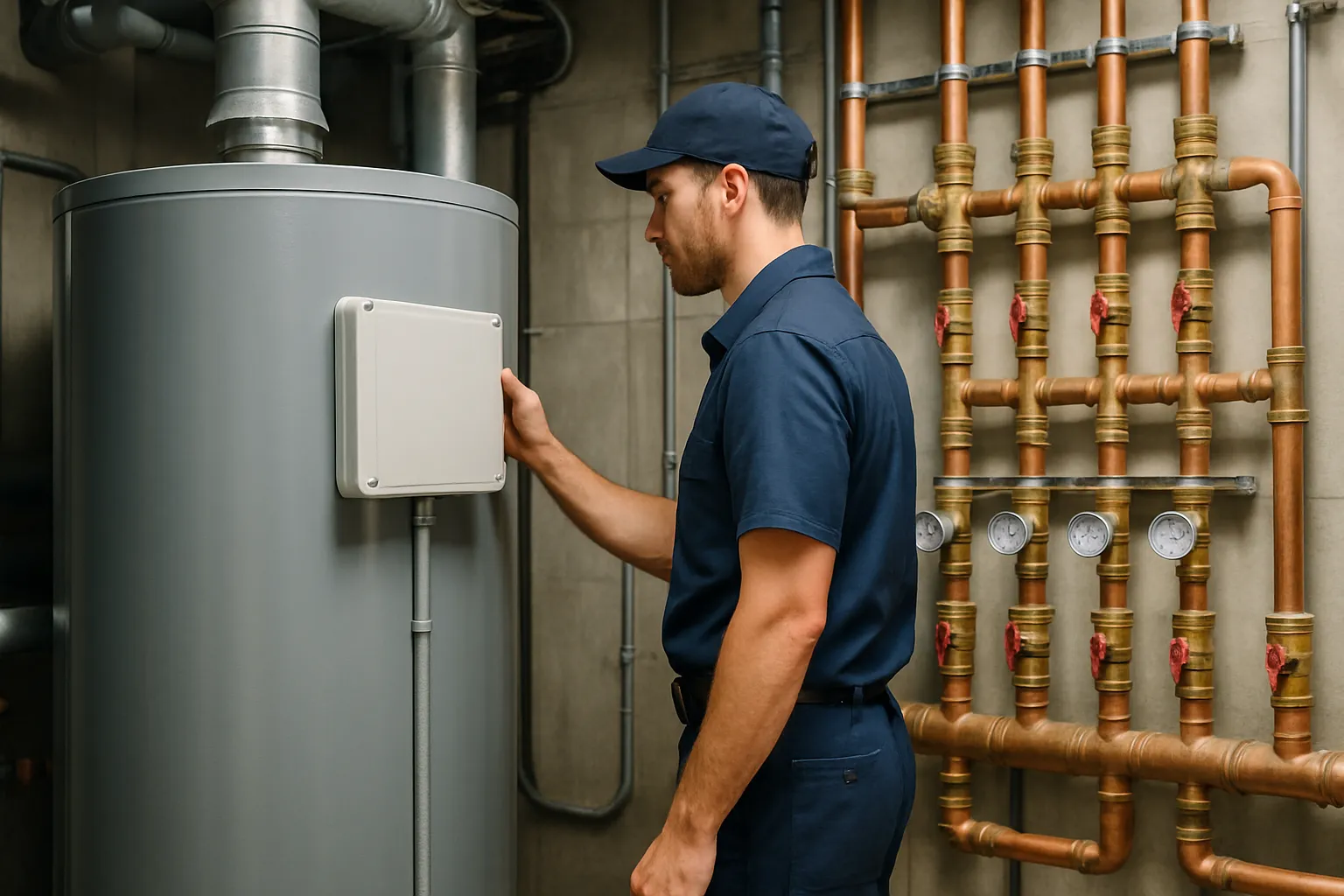
How Electrical Panel Upgrades Interact with Commercial Plumbing Systems
An electrical panel upgrade affects more than lighting and office equipment. For property and facility managers, the most important consideration is how increased or reorganized capacity supports plumbing and mechanical systems:
Drain and Sewer Systems
Many commercial buildings rely on electrically driven equipment for drainage performance:
- Sump and lift stations – Pumps, level sensors, and control panels need reliable circuits sized for starting currents. Reconfigured panels can provide dedicated, protected circuits with proper labeling.
- Hydro jetting equipment hookups – For facilities that host jetting contractors, dedicated high-amperage receptacles or disconnects can be added during the panel redesign.
Water Supply and Distribution
Pressurized systems rely on electrical power for critical functions:
- Booster pump systems – Adequate panel capacity and properly sized breakers help prevent voltage drop during pump start-up, improving performance and reducing motor failures.
- Controls and building automation – Panels must reliably support PLCs, pressure sensors, and BMS panels that monitor domestic and process water.
Commercial and Tankless Water Heaters
High-efficiency electric or hybrid commercial water heaters, and large electric tankless systems, can draw substantial current. An electrical panel upgrade allows correct feeder sizing, dedicated circuits, and future expansion for redundancy or additional heaters.[3][5]
Backflow Prevention and Freeze Protection
While backflow assemblies themselves are mechanical, supporting systems may require power:
- Heat tracing on exposed piping
- Monitoring devices tied into building management systems
Upgraded panels can allocate reliable circuits to these safety-critical elements, reducing freeze and contamination risk.
Grease Interceptors and Kitchen Drainage
Grease interceptors and associated lift stations in food service or mixed-use buildings often depend on pumps and alarm panels. A modern panel can provide dedicated kitchen drainage circuits with GFCI protection where required, reducing overflow incidents and downtime.[3]
Gas Piping and Combustion Equipment
Gas-fired boilers and water heaters still need electricity for ignition systems, combustion controls, and circulation pumps. Ensuring those circuits have appropriate capacity and protection is part of a comprehensive electrical panel upgrade design.
Step-by-Step Electrical Panel Upgrade Process for Commercial Buildings
While only licensed electricians should perform the work, property and facility managers should understand the typical commercial workflow.
1. Assessment and Load Study
A qualified commercial electrical contractor evaluates the existing panel, feeder sizes, and connected loads to determine whether an electrical panel upgrade is necessary.[5] This includes:
- Documenting current electrical demand and diversity
- Reviewing mechanical and plumbing equipment nameplate ratings
- Identifying planned future loads (new pumps, heaters, EV charging, IT upgrades)
- Checking for code deficiencies and physical condition of the panel[3][5]
2. Design and Planning
If an upgrade is warranted, the electrician designs a new panel layout and capacity, often 400A, 800A, or higher, depending on building size and use.[3][5] Key tasks include:
- Selecting a modern panelboard or switchboard with adequate spare spaces for future plumbing and mechanical circuits[3]
- Coordinating with plumbing and mechanical contractors on dedicated circuit needs
- Preparing drawings and one-line diagrams for permit submittal
- Scheduling work around business operations to minimize downtime
3. Permitting and Utility Coordination
Commercial electrical panel upgrades generally require permits and inspections. The contractor will handle applications, arrange any required utility shutdowns, and confirm short-term impacts on water, drainage, and HVAC operations.[2][3][5]
4. Installation and Cutover
During the scheduled shutdown, the electrician:
- Safely disconnects the old panel and associated feeders[5]
- Installs the new panel, breakers, and grounding/bonding upgrades in accordance with local codes[3][5]
- Re-connects and clearly labels circuits, prioritizing life-safety and critical plumbing equipment
For facilities with critical sump and lift stations, booster pumps, or hospital/healthcare loads, temporary power or staged cutovers may be planned to avoid service interruptions.
5. Testing, Inspection, and Commissioning
Once installed, the contractor tests the panel, verifies torque on connections, and checks breaker operation.[5] The local authority having jurisdiction conducts final inspections to confirm code compliance. Panels with integrated GFCI, AFCI, and other modern protection devices improve overall safety and reliability.[3]
6. Ongoing Maintenance and Documentation
After the electrical panel upgrade, facility teams should maintain:
- Up-to-date panel schedules and circuit directories
- Routine infrared scanning to detect hot spots
- Periodic tightening and inspection, especially on high-load plumbing and mechanical circuits
Proper documentation supports future plumbing and mechanical projects and simplifies troubleshooting.

Cost, ROI, and Project-Scale Context for Electrical Panel Upgrades
Commercial electrical panel upgrade costs vary by region, amperage, and complexity. Available industry estimates suggest:
- Small commercial upgrades – Approximately $3,000–$7,000 for modest office or retail spaces.[6]
- Larger commercial or warehouse upgrades – Approximately $8,000–$20,000+ where amperage and distribution are more substantial.[6]
- Other sources describe typical commercial panel upgrades in the $3,500–$12,000+ range, including labor, materials, permits, and inspections.[2]
For property managers, ROI is rarely about direct revenue; it is about avoided risk and enabling upgrades. Benefits include:
- Reduced downtime for pumps, water heaters, and drainage systems due to fewer electrical failures.[3][5]
- Improved safety from modern breaker technology and better fault protection, lowering fire and equipment damage risk.[3]
- Capacity for modernization – Ability to add efficient equipment, EV infrastructure, or expanded plumbing systems without costly emergency rework.[3][5][9]
Strategically, an electrical panel upgrade is best approached as part of a broader capital plan that includes plumbing upgrades, water heater replacements, or major tenant improvements. Coordinated upgrades can minimize disruptions and optimize permit and inspection cycles.
Practical Checklists and Action Items for Facility Teams
Pre-Upgrade Planning Checklist
- Compile a list of all major plumbing and mechanical loads (booster pumps, sump/lift pumps, commercial water heaters, treatment systems).
- Gather as-built drawings, panel schedules, and any prior infrared or inspection reports.
- Identify upcoming projects (tenant improvements, kitchen expansions, EV charging, IT upgrades) that will change electrical demand.
- Engage a licensed commercial electrician experienced in panel upgrades for similar building types.[1][2][4][8]
During Design and Permitting
- Confirm critical circuits that must be prioritized or kept online, such as medical gas, fire pumps, or essential drainage.
- Coordinate shutdown windows with tenants and operations teams.
- Align panel capacity decisions with long-term plumbing and mechanical plans, not just current loads.
Post-Upgrade Operations
- Update emergency procedures to reflect new panel locations and breaker labeling.
- Log any plumbing or mechanical performance improvements (e.g., fewer pump trips, more stable water pressure).
- Schedule periodic inspections and testing of breakers serving critical plumbing equipment.
By treating an electrical panel upgrade as an integrated infrastructure project rather than a standalone electrical task, property and facility managers can protect their plumbing systems, reduce risk, and create a more resilient commercial building.
Frequently Asked Questions
How should property managers budget for a commercial electrical panel upgrade?
Property managers should expect a commercial electrical panel upgrade to cost roughly $3,000–$7,000 for small buildings and $8,000–$20,000+ for larger facilities, based on industry estimates.[2][6] Budgeting should also account for design, permits, potential utility coordination, and planned mechanical/plumbing expansions to maximize long-term ROI.
Is an electrical panel upgrade required to add new pumps or commercial water heaters?
Not always, but any large new load (booster pumps, lift stations, commercial or tankless water heaters) can exceed the available capacity of older panels. A load study by a licensed electrician is essential to determine whether an electrical panel upgrade or targeted circuit reconfiguration is needed to support safe, reliable operation.[3][5][9]
What are the main compliance and safety benefits of upgrading a commercial electrical panel?
Upgrading to a modern panel improves circuit protection, grounding, and fault handling, reducing fire, shock, and equipment damage risks.[3][5] It also helps align the building’s electrical system with current codes and standards, which is increasingly important when adding new plumbing, mechanical, or life-safety equipment.
How does an electrical panel upgrade reduce operational risk for plumbing systems?
An electrical panel upgrade reduces nuisance trips and voltage fluctuations that can damage motors and controls serving sump and lift stations, booster pumps, and commercial water heaters.[3][5][7] It increases capacity for future upgrades and improves reliability for drainage and water supply systems, lowering the risk of service interruptions.
What criteria should facility managers use when selecting a contractor for an electrical panel upgrade?
Facility managers should seek licensed commercial electricians with proven experience in panel upgrades for similar building types, strong references, and familiarity with local codes and inspections.[1][2][4][8] They should also confirm the contractor’s ability to coordinate with plumbing, mechanical, and facility teams to manage shutdowns and protect critical systems.
Related Reading on My Plumbing Tech
- Plumbing Industry Growth Signals More Demand for Commercial Plumbing Assets
- Commercial Electrical Services: A Practical Guide for Plumbing-Heavy Facilities
Find a Qualified Commercial Plumbing Contractor
Need help acting on this? Browse commercial plumbers in your area, or explore commercial plumbing services like preventative maintenance, inspections, and emergency response. Are you a contractor? List your business on My Plumbing Tech to reach property and facility managers actively searching for help.