
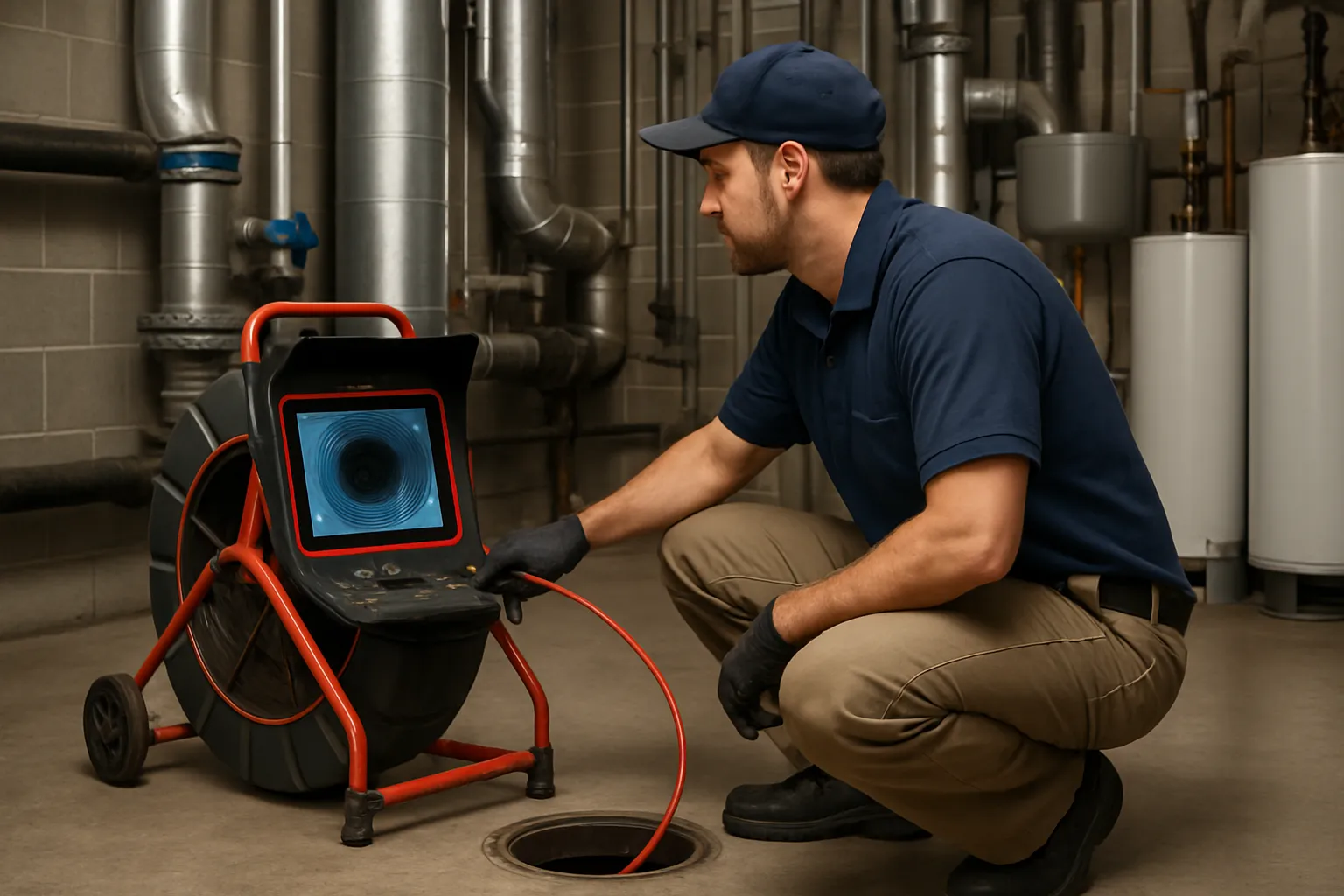
 My Plumbing Tech
Commercial Electrical Services: A Practical Guide for Plumbing-Heavy Facilities
Quick Answers for Property & Facility Managers
How should facility managers scope commercial electrical services around critical plumbing systems?
Start by mapping every plumbing-related electrical load—booster pumps, sump and lift stations, commercial water heaters, grease interceptors, and backflow devices—then verify panel capacity, circuit protection, and emergency power. Combine this with code review and maintenance history to define a clear, risk-based project scope.
When do plumbing-driven electrical issues justify full system upgrades instead of repairs?
If frequent breaker trips, pump failures, nuisance alarms or power-quality problems affect essential plumbing systems, and the gear is outdated or non-code-compliant, a planned upgrade is often cheaper and safer than repeated repairs, especially where life safety, water damage or downtime risks are high.
How can commercial electrical services improve ROI on water heaters and pumps?
Properly sized circuits, smart controls, and power-quality improvements reduce nuisance shutdowns and extend equipment life. Coordinating controls and power for commercial water heaters, pumps, and lift stations can lower energy use, avoid emergency calls, and enhance uptime, improving total lifecycle ROI.
Why Commercial Electrical Services Matter for Plumbing-Heavy Buildings
For commercial properties, electrical and plumbing systems are inseparable. Commercial electrical services directly impact uptime and risk for water supply, drainage, gas piping, and specialty systems like grease interceptors and backflow prevention. Core building systems such as water heaters, booster pumps, and sump/lift stations rely on safe, reliable power and controls.[8][10]
Codes and standards require electrical work supporting mechanical and plumbing systems to be installed by qualified, licensed contractors.[8][10] For property managers, facility managers, and building owners, that means you must treat electrical support for plumbing as a critical infrastructure issue rather than a minor repair.
Practical planning starts by aligning electrical upgrades and maintenance with your plumbing priorities: protecting against water damage, ensuring continuous domestic water, enabling safe gas delivery, and complying with fire, life safety, and health codes.[8]
Mapping Plumbing-Related Electrical Loads in Your Building
Before you hire commercial electrical services, you should understand which plumbing components depend on power. Licensed commercial electricians typically begin with a load inventory and site assessment.[8][10]
Key plumbing-related electrical loads
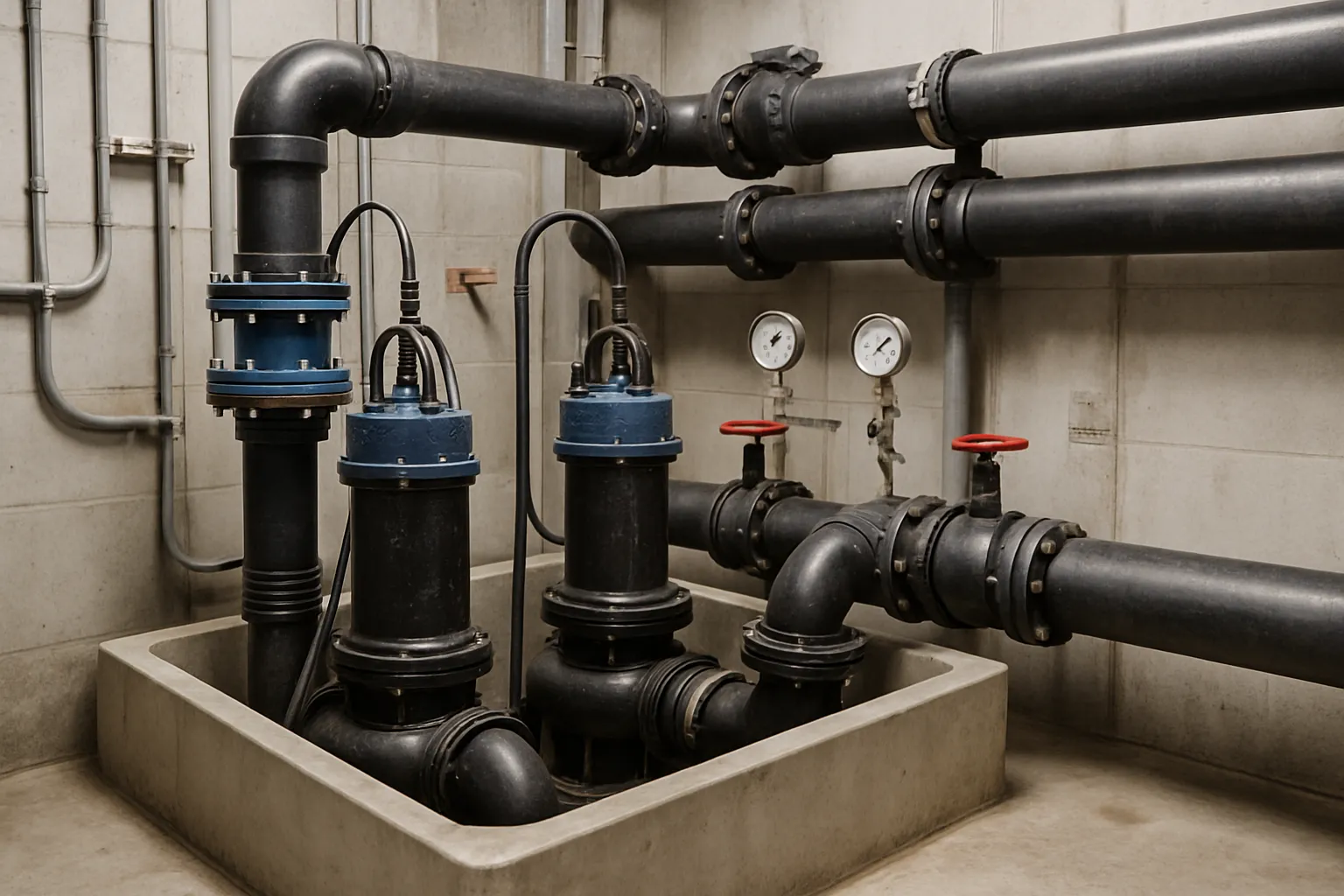
- Drain & sewer systems: Sump pumps, sewage ejector pumps, and lift stations require correctly sized circuits, motor starters, and often dedicated emergency power to prevent backups and flooding.[8]
- Water supply & distribution: Booster pumps, pressure-reducing station controls, and building automation interfaces depend on reliable line power and sometimes variable frequency drives (VFDs).[8]
- Commercial water heaters (including tankless): Electric water heaters demand high-amperage circuits; gas-fired units need powered controls, ignition, and sometimes recirculation pumps. Mis-sized circuits cause nuisance trips and premature failure.[10]
- Backflow prevention assemblies: Monitoring equipment, heat-trace on outdoor piping in cold climates, and control wiring for isolation valves rely on correctly installed electrical branches.
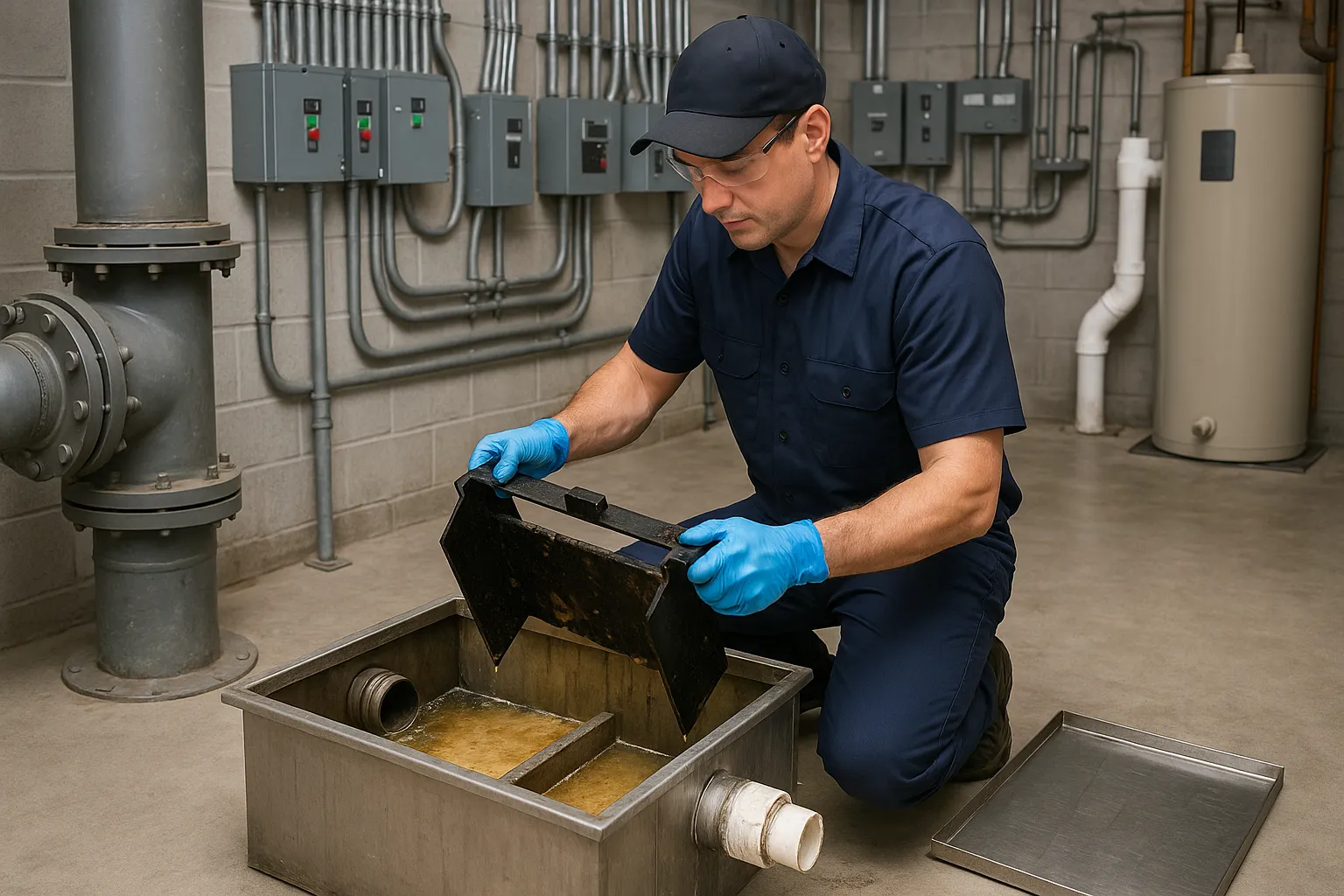
- Grease interceptors and pre-treatment equipment: Automatic grease removal systems and sampling pumps need properly protected circuits in corrosive, high-moisture environments.
- Gas piping systems: Gas detection, alarm panels, shutoff valves, and ignition controls require fail-safe power and coordination with emergency systems.
Action item: Walk each building with your mechanical/plumbing contractor and a commercial electrician to produce a shared list of all plumbing-connected devices that require power, including nameplate data (voltage, amperage, phase, motor HP).
Coordinating Commercial Electrical Services with Plumbing Projects
Effective coordination reduces downtime and change orders. Many commercial electricians explicitly list remodels, tenant buildouts, circuits for medical facilities, and generator backup among their services, which often integrate with plumbing and mechanical scopes.[8]
Step-by-step coordination process
- 1. Define project scale: Clarify whether the work is a single equipment change (e.g., replacing one booster pump), a floor-level retrofit, or a building-wide upgrade. Larger scopes may require temporary water or sewer solutions and staged shutdowns.
- 2. Review one-line diagrams and plumbing risers: Compare electrical one-lines with plumbing riser diagrams and equipment schedules to identify shared dependencies (panels feeding multiple pumps, critical circuits tied to life safety).
- 3. Confirm capacity and protection: Have your commercial electrical services provider verify panel capacity, fault current, and circuit protection for new pumps, water heaters, or lift stations before equipment is ordered.[8]
- 4. Plan outages around occupancy: For offices, retail, healthcare, and warehouses, schedule work during off-hours and coordinate with tenants to avoid disrupting operations, restrooms, and process water.
- 5. Align controls and BMS: Ensure new electrical work supports building management systems (BMS), alarms, and remote monitoring for plumbing-critical assets (pump run status, high-level alarms, leak detection).
Action item: Require your electrical and plumbing contractors to submit an integrated phasing plan showing which zones, bathrooms, kitchens, or process areas will lose service, for how long, and what temporary measures will be in place.
Drain & Sewer, Sump, and Lift Stations: Electrical Reliability and Risk
Failures in electrically driven drain and sewer components can quickly become emergency events. Commercial electricians commonly respond to service calls and troubleshooting for such systems, particularly where pumps and controls are involved.[8][10]
Risk-focused checklist for sewer-related electrical systems
- Verify dedicated circuits and properly sized breakers for each sump or sewage pump.
- Confirm correct voltage, phase, and overload protection on motor starters or VFDs.
- Check for corrosion-resistant enclosures and proper sealing in wet locations.
- Test high-water and pump-failure alarms, including panel annunciation and remote notifications.
- Identify which pumps must be supported by generator backup or UPS to prevent flooding.[8]
Project-scale context: For small office buildings, a single sump or ejector on a dedicated circuit may suffice. Larger retail centers, multifamily, or healthcare facilities often require redundant pumps, separate feeds, and generator-backed circuits to maintain sanitary service during outages.
Cost/ROI context: Upgrading power and controls for pump systems may cost more upfront than repeated emergency calls, but it substantially reduces flood risk, tenant damage claims, and health code violations, especially in basements and below-grade restrooms.
Water Supply, Booster Pumps, and Commercial Water Heaters
Booster pumps and water heaters are core to occupant comfort and process reliability. Commercial electrical services typically include new system installs, maintenance, upgrades, and troubleshooting for such equipment.[10]
Water supply and booster pumps
- Confirm proper circuit sizing for pump motors, including locked-rotor current.
- Evaluate the need for VFDs to reduce pressure swings and energy use.
- Provide disconnects within sight of equipment per electrical safety standards.
- Coordinate pressure sensor wiring, BMS integration, and alarm circuits.
Commercial and tankless water heaters
- Ensure dedicated, correctly sized feeders for large electric water heaters; shared circuits increase trip risk.
- For gas-fired units, verify power for ignition controls, recirc pumps, and any heat-trace or control panels.
- Check correct grounding and bonding to reduce electrical shock risk in wet mechanical rooms.
Cost/ROI context: A targeted electrical upgrade—VFD installation, panel capacity increase, or improved controls—often yields measurable energy savings and fewer emergency call-outs. While exact numbers vary by building and utility rates, industry practice shows that power-quality and control improvements can extend pump and heater life significantly, lowering lifecycle costs.[8][10]
Backflow, Grease Interceptors, Gas Piping: Electrical Interfaces and Safety
Ancillary plumbing systems such as backflow prevention, grease management, and gas piping also rely on thoughtful electrical design. Many commercial electricians serve industrial and institutional clients where these systems are common.[1][8]
Backflow prevention and monitoring
- Provide reliable power for heat-trace and monitoring in exposed locations.
- Integrate status and alarm contacts into BMS with appropriate low-voltage wiring.
- Ensure separation between power circuits and potable water components for safety.
Grease interceptors and pre-treatment
- Use GFCI protection and wet-location-rated enclosures for interceptors in kitchens.
- Plan circuits for automatic grease removal equipment and sample pumps.
- Coordinate shutdowns to avoid restaurant or cafeteria service interruptions.
Gas piping systems
- Design and power gas detection and alarm panels following manufacturer requirements.
- Provide fail-safe circuits for automatic shutoff valves tied to fire alarms.
- Coordinate emergency power for critical gas controls where required by code.
Action item: Add these ancillary systems to your preventive maintenance plans, including annual testing of alarms, detectors, and shutoff controls in coordination with both electrical and plumbing contractors.
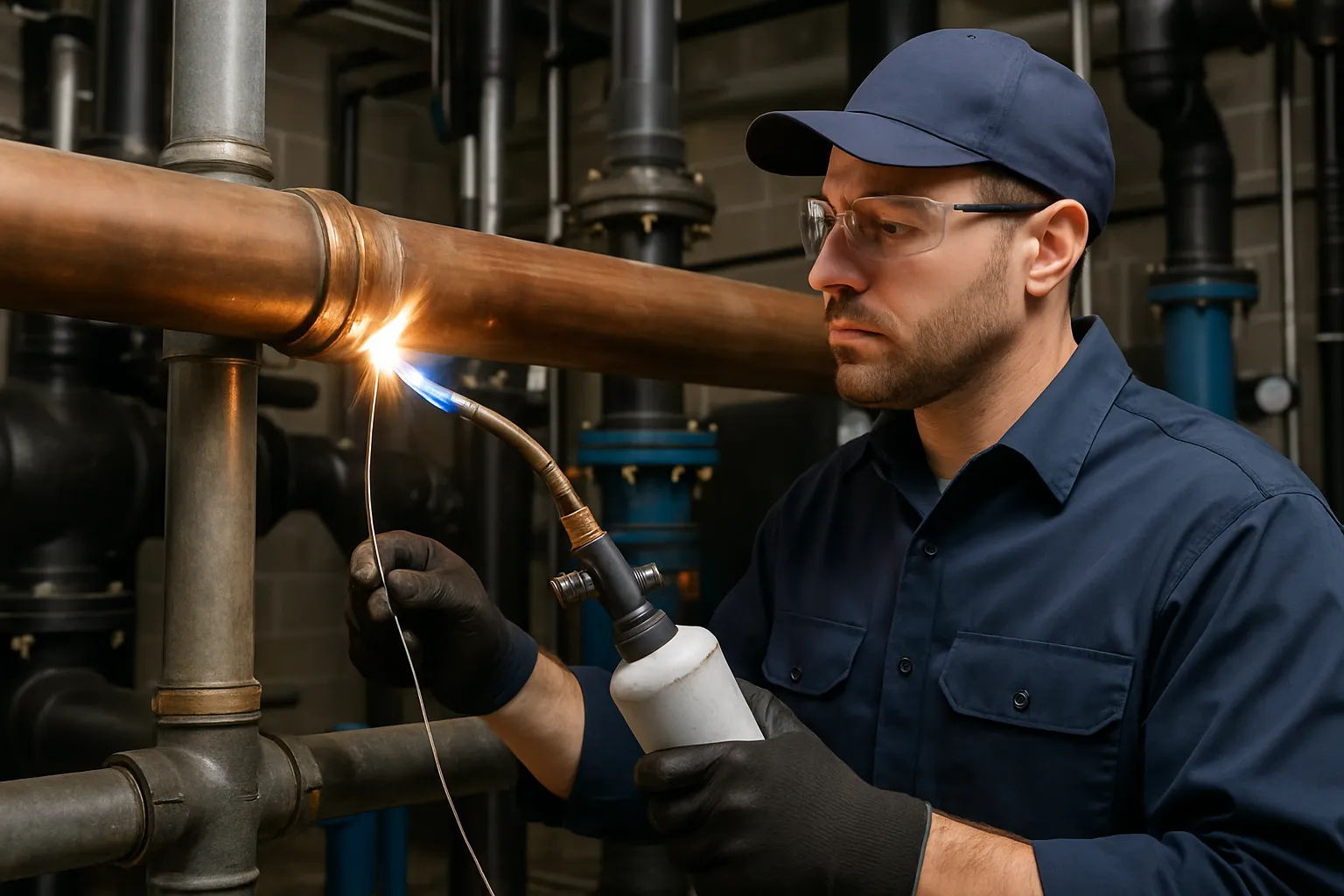
Planning Maintenance vs. Repair vs. Full Replacement with Commercial Electrical Services
Commercial electricians often distinguish between service calls, remodels, tenant buildouts, and generator backup work, reflecting different investment levels and risk profiles.[8] For plumbing-driven projects, you should make similar distinctions.
When to prioritize preventive maintenance
- Electrical testing for pump panels, heaters, and controls on an annual or semi-annual schedule.
- Thermal scans of panels feeding critical plumbing equipment to catch loose connections.
- Regular testing of alarms, level controls, and emergency power.
When repairs are appropriate
- Single breaker failures or localized wiring issues on otherwise modern systems.
- Isolated control problems where underlying gear is still within expected service life.
When full replacement or upgrades make sense
- Repeated nuisance trips affecting essential water or sewer systems.
- Obsolete panels, lack of capacity for new equipment loads, or non-compliant installations.
- Major building changes: new tenants, process loads, or healthcare expansions.
Cost/ROI context: While exact costs depend on region and scope, industry practice shows that strategic upgrades—such as modern panels, VFDs, and properly sized circuits—reduce emergency service calls and extend equipment life. Coordinating commercial electrical services with plumbing capital plans allows you to bundle work, minimize shutdowns, and improve total project ROI.[8][10]
For property managers, facility managers, and building owners, the most cost-effective approach is to treat electrical and plumbing as a single system: jointly assess risk, coordinate contractors, and use commercial electrical services to harden your plumbing infrastructure against failures, outages, and code issues.
Frequently Asked Questions
How should I budget for commercial electrical services tied to plumbing systems?
Create a multi-year plan that groups electrical work by risk and impact: sump and lift stations, water heaters and booster pumps, then ancillary systems like grease interceptors and gas controls. Fund preventive testing first, then allocate capital for panel upgrades and control improvements where failures would cause flooding, downtime, or compliance issues.
What compliance and safety risks arise if electrical work for plumbing systems is deferred?
Deferred electrical maintenance on pumps, heaters, and gas controls increases risk of flooding, sewer backups, scalding issues, and gas leaks. It can also leave life safety and health-code gaps if alarms or emergency power don’t function as intended, exposing owners to enforcement actions and costly reactive repairs.
What should facility managers demand from commercial electrical services providers on plumbing projects?
Require licensed, insured contractors with documented commercial experience, clear scopes tied to plumbing assets, coordination with mechanical/plumbing trades, and written testing procedures. Insist on updated as-built documentation, panel schedules, and alarm/monitoring verification so future maintenance teams can manage risk effectively.
How do commercial electrical services integrate with generator and backup power for plumbing systems?
Commercial electricians design and install transfer switches, generator feeders, and priority circuits so essential plumbing loads—sump and lift stations, booster pumps, critical water heaters, and gas safety controls—remain powered during outages. Proper design avoids overloading generators and ensures life safety and sanitation are maintained.
Can electrical upgrades reduce operating costs for commercial plumbing equipment?
Yes. Upgrading panels, controls, and motor drives can improve power quality, reduce equipment cycling, and lower energy use for pumps and heaters. While savings vary by building and utility rates, these improvements generally reduce emergency calls and extend asset life, improving overall lifecycle cost performance.
Related Reading on My Plumbing Tech
- Commercial Plumbing Codes, Workforce and Supply Chain Pressures: What the ASA–PHCC Capitol Hill Fly-In Means for Building Owners
- Hydro Jetting for Commercial Buildings: How It Works, When to Use It, and What It Costs
Find a Qualified Commercial Plumbing Contractor
Need help acting on this? Browse commercial plumbers in your area, or explore commercial plumbing services like preventative maintenance, inspections, and emergency response. Are you a contractor? List your business on My Plumbing Tech to reach property and facility managers actively searching for help.