 My Plumbing Tech Editorial Team
Hydro Jetting for Commercial Buildings: How It Works, When to Use It, and What It Costs
Quick Answers for Property & Facility Managers
What is hydro jetting in commercial plumbing and when should a facility use it?
Hydro jetting is a professional drain and sewer cleaning method that uses high‑pressure water (often 3,000–8,000 PSI) to scour pipe walls and flush out grease, sludge, and debris.[3][4] Facility and property managers typically use it for recurring clogs, slow main drains, grease‑heavy lines, or as scheduled maintenance in high‑use commercial buildings.[3][7][9]
Is hydro jetting safe for my building’s pipes and tenants’ operations?
When performed after a camera inspection by a qualified commercial plumber, hydro jetting is generally safe for sound PVC, cast iron, and clay sewer piping and uses only water, with no harsh chemicals.[2][4][6] Work can often be scheduled off‑hours or by zone to minimize disruption in offices, retail, healthcare, and industrial spaces.[7]
How often should commercial properties schedule hydro jetting service?
Many commercial drain and sewer lines—especially in food service or high‑occupancy buildings—benefit from hydro jetting every 6–12 months as preventative maintenance, depending on usage and grease/solids load.[3][9] High‑grease kitchens or frequent backups may require more frequent service as recommended by your plumbing contractor.[3][7][9]
What Hydro Jetting Is and Why It Matters for Commercial Buildings
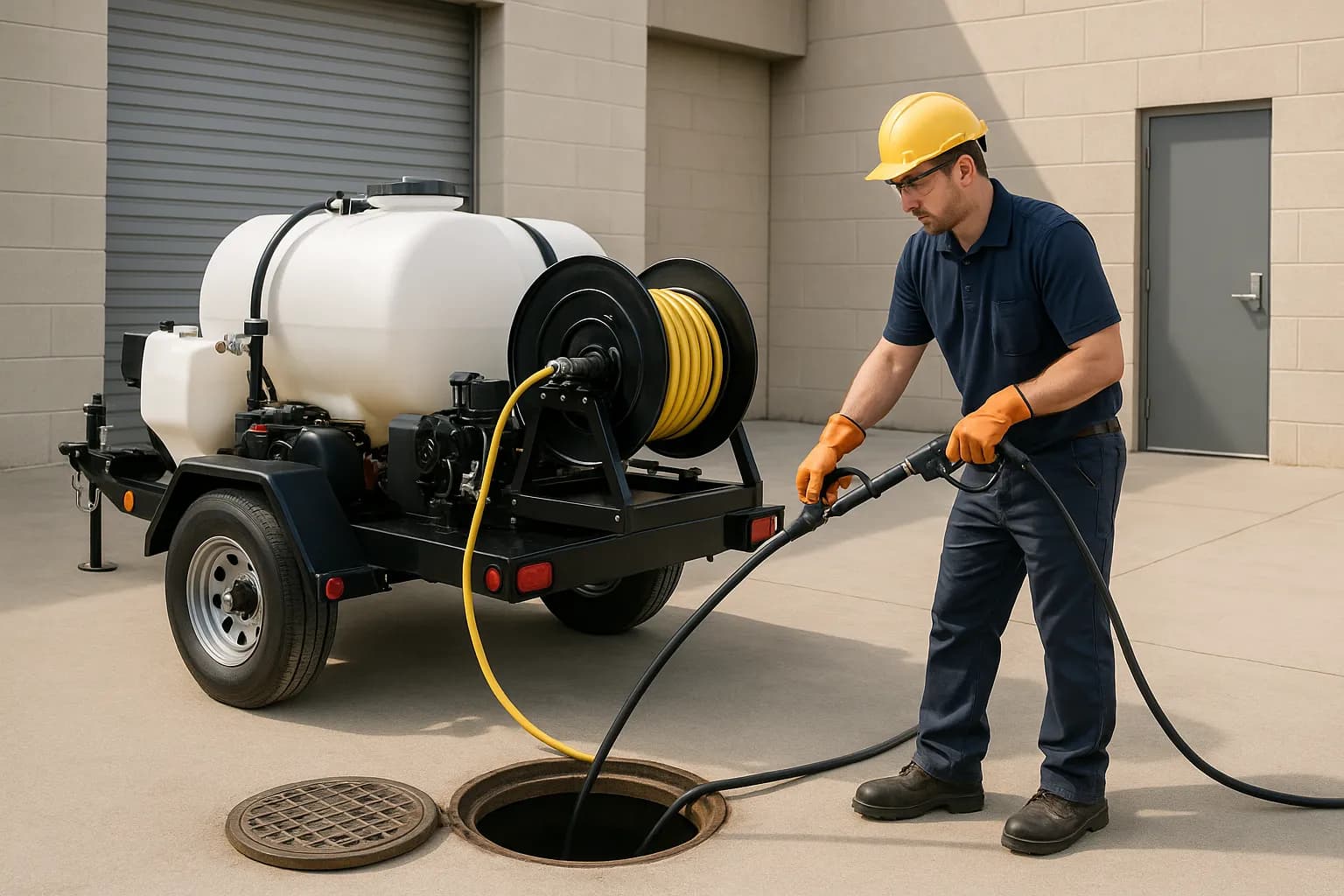
Hydro jetting is a drain and sewer cleaning method that uses high‑pressure water to remove grease, sludge, mineral scale, and debris from the inside of pipes.[2][3][4] A hose with a specialized nozzle is inserted into the line and water is delivered at pressures that commonly range from about 1,500 PSI up to 5,000 PSI or more for heavy commercial applications.[3][4][6] This scours the full pipe diameter rather than just punching a hole through a clog.
Unlike traditional cabling/snaking, which primarily bores through obstructions, hydro jetting cleans pipe walls and flushes out loosened material, restoring near‑original capacity and improving flow.[1][3][5][7] For property managers and facility teams, this means fewer recurring blockages, less risk of sewage backups into occupied spaces, and extended service life of existing drain and sewer infrastructure.[1][5][7]
Because hydro jetting relies only on water pressure, it avoids the use of harsh chemical drain cleaners and reduces mechanical abrasion inside the pipe, making it an environmentally friendly and non‑corrosive option when performed correctly.[2][3][5]
How Hydro Jetting Works Step by Step in a Commercial Setting
In commercial projects—office towers, healthcare, retail centers, warehouses, food plants—the hydro jetting process should be structured and documented. A typical workflow with a qualified commercial plumber includes:
1. Assessment and System Scoping
- Gather building data: Identify affected stacks, tenant spaces, kitchens, restrooms, labs, and mechanical rooms. Note pipe materials (PVC, cast iron, clay), sizes, and known problem areas.
- Initial symptoms: Log recurring slow drains, gurgling, foul odors, grease trap overflows, or past sewage backups. This helps prioritize lines for hydro jetting.
- Video camera inspection: Before jetting, most contractors perform a CCTV inspection to locate blockages and verify pipe condition.[4] This is especially important for older cast iron or clay laterals.
2. Selecting Hydro Jetting Equipment and Pressures
- Pressure selection: Typical working pressures for commercial hydro jetting range from roughly 1,500 PSI for lighter maintenance cleaning to 3,000–5,000 PSI or higher for heavy grease and sludge.[3][4][6] The contractor sets pressure based on pipe diameter, material, and condition.
- Nozzle choice: Different nozzles (penetrating, rotary, grease‑cutting, root‑cutting) direct high‑velocity jets forward and backward to cut through buildup and simultaneously pull the hose through the line.[2][3][6]
- Access points: Plumbers use existing cleanouts, manholes, or rooftop vents to access main building drains and laterals to the municipal sewer.
3. Jetting and Flushing Operations
- Controlled passes: The hose is advanced, and the high‑pressure water stream dislodges grease, sludge, sand, and debris, carrying it downstream for removal.[2][3][5]
- Full‑diameter cleaning: As the nozzle travels, it scours the full internal circumference of the pipe, removing residue that would otherwise cause repeat clogs.[2][3][5][7]
- Final inspection: After jetting, many contractors perform another camera pass to verify cleanliness, confirm no structural failures, and provide video for your facility records.[4][7]
4. Post‑Service Documentation for Facility Records
- Video files or snapshots of before/after conditions.
- Line map showing which segments were jetted.
- Findings (sags, cracks, root intrusion, cross‑connections) that may require repair or lining in the future.
- Recommended hydro jetting maintenance interval based on usage (often every 6–12 months for commercial lines).[3][9]
Where Hydro Jetting Fits in Your Commercial Plumbing Systems
Hydro jetting is primarily a drain and sewer service, but its impact spans multiple plumbing subsystems that matter to property and facility managers.
Drain & Sewer Lines
- Main building drains and laterals: Hydro jetting removes accumulated sludge, sand, and debris in large‑diameter mains, minimizing risk of building‑wide backups.[1][5][7]
- Vertical stacks: In high‑rise offices and mixed‑use properties, stacks serving restrooms and break rooms can be jetted from roof vents or intermediate cleanouts to address chronic slow drainage.
- Sewer laterals to the street: Jetting can clear heavy buildup and some root intrusions (if nozzle types and pressures are suitable), restoring flow and helping you defer full line replacement where structurally sound.[4][7]
Grease Interceptors and Commercial Kitchen Drains
- Kitchen drain branches: Food courts, restaurants, cafeterias, and central kitchens generate heavy grease and food solids that quickly coat pipe walls. Hydro jetting is widely used for commercial kitchen drain maintenance because it removes grease films and solids far more thoroughly than snaking.[3][7]
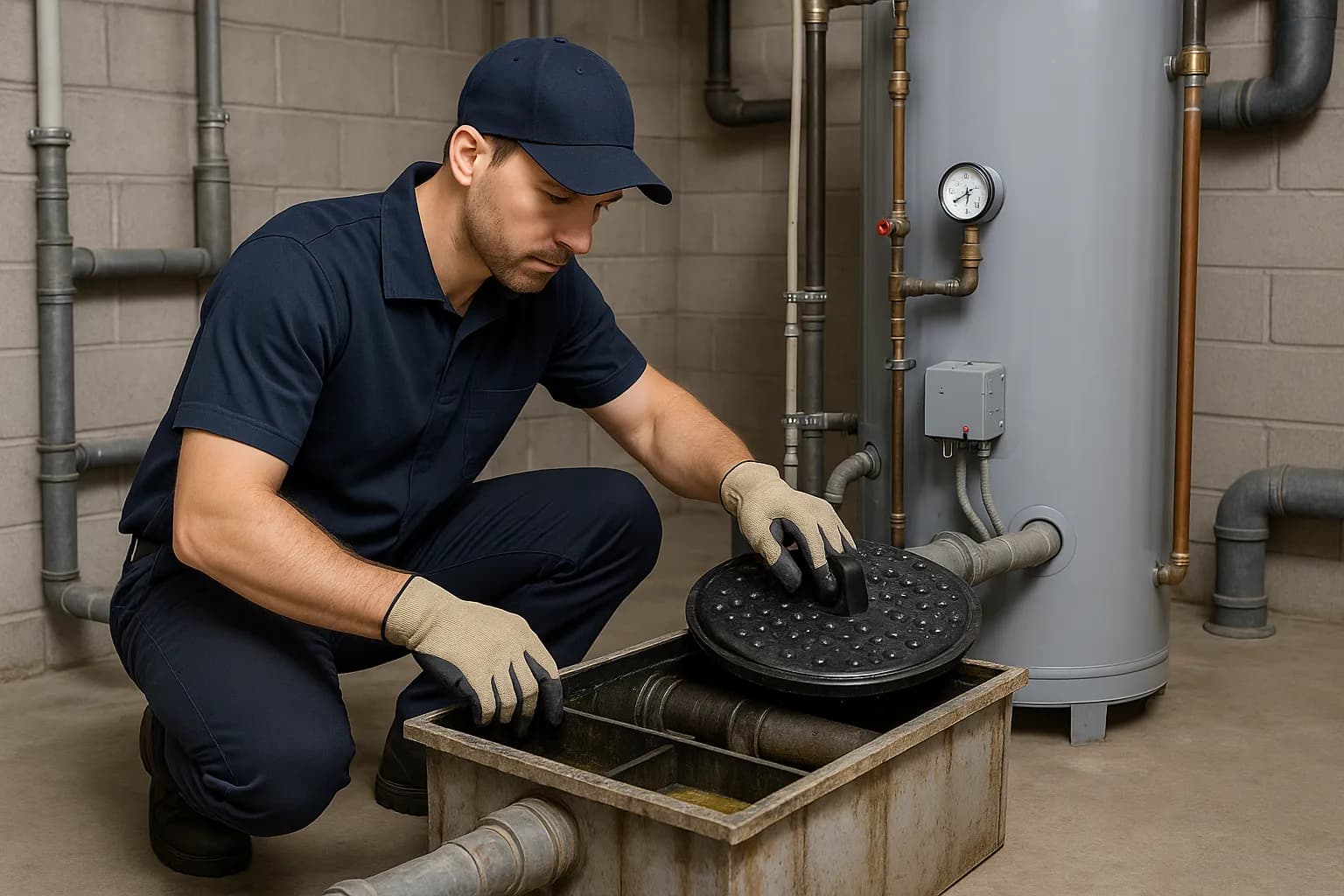
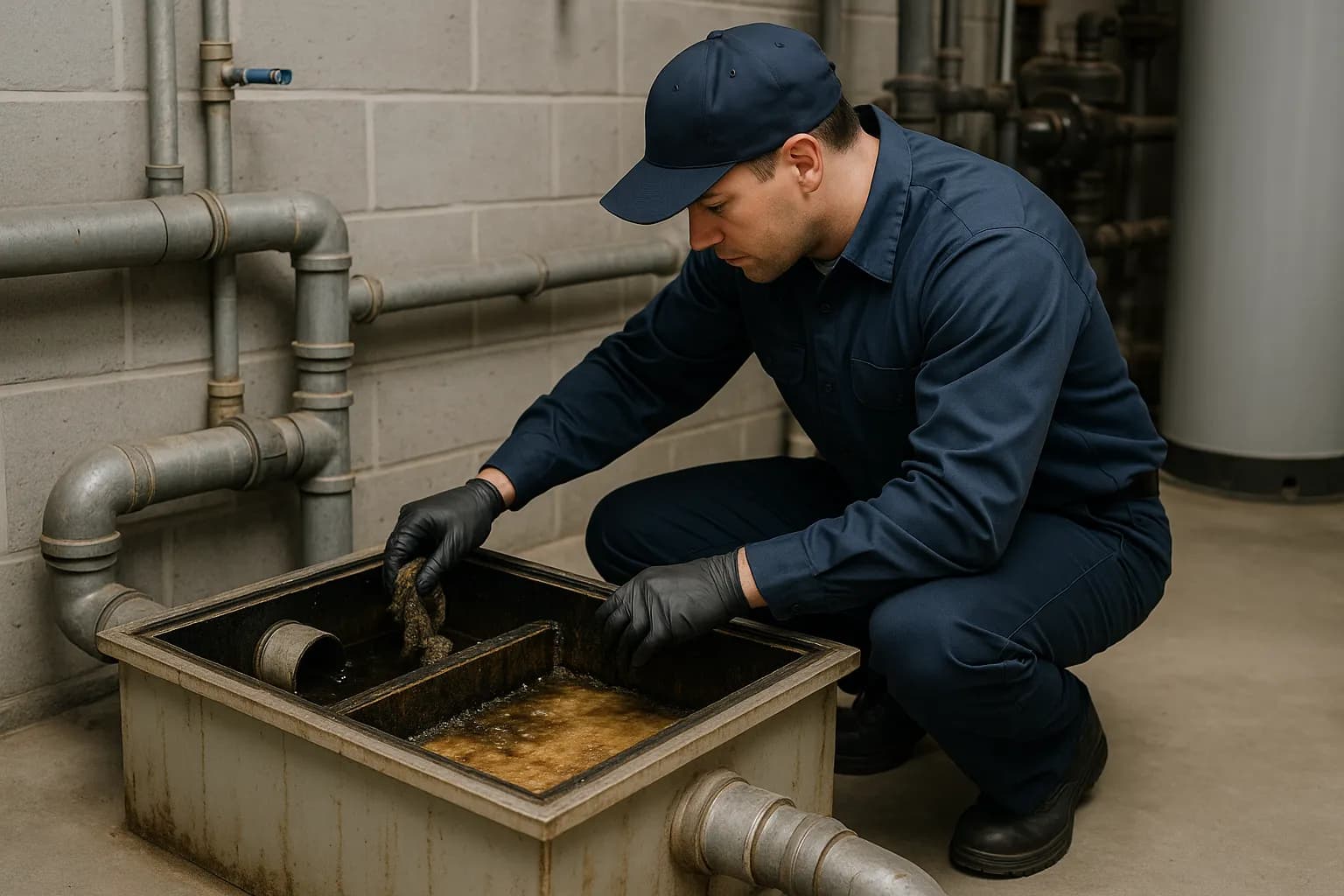
- Lines to and from grease interceptors: Regular jetting of inlet and outlet lines helps prevent overflows and can support compliance with local FOG (fats, oils, and grease) regulations, reducing the risk of fines or emergency pump‑outs.[3]
Water Supply / Distribution and Water Heaters
Hydro jetting is not typically used inside domestic water supply or distribution piping or directly on water heaters. Potable water systems are handled with different cleaning and flushing protocols, such as high‑velocity flushing and chemical treatment where allowed by code.
However, hydro jetting supports these systems indirectly:
- Condensate and relief drains: Commercial boilers and water heaters rely on clear condensate and relief drains. Jetting can be used on associated drain lines to prevent backups that might trip equipment or cause water damage.
Backflow Prevention and Gas Piping
Backflow preventers and gas piping are not cleaned with hydro jetting; they are governed by separate test, inspection, and maintenance standards. Hydro jetting instead protects these assets by reducing the chance of flooding or wastewater exposure in mechanical rooms, meter rooms, and utility corridors.
When to Choose Hydro Jetting vs Snaking or Pipe Replacement
For owners and facility managers, hydro jetting decisions fall into three categories: emergency response, preventative maintenance, and capital planning.
1. Hydro Jetting vs Traditional Snaking (Mechanical Cabling)
- Use snaking when you need a rapid, localized opening in a single small line and cannot immediately mobilize jetting, such as a single restroom stack or tenant sink.
- Use hydro jetting when you have recurring clogs, long horizontal runs, or heavy grease/sludge where you want a thorough cleaning of the entire line.[1][3][5][7]
- Hydro jetting is especially valuable in food service, healthcare, and high‑occupancy buildings where downtime is costly and cleanliness standards are high.[3][7]
2. Hydro Jetting vs Full Replacement or Lining
- Good candidates: Structurally sound lines with heavy deposits, grease buildup, or minor roots are ideal for hydro jetting to restore capacity and delay major capital work.[1][4][7]
- Poor candidates: Severely cracked, collapsed, or mis‑aligned pipes may not be safe to jet at higher pressures; camera inspections will reveal when pipe lining or replacement is required instead of cleaning.[4]
- Strategic use: Hydro jetting is often performed immediately before trenchless lining or epoxy coating to properly prepare the host pipe interior.
Cost and ROI: Budgeting Hydro Jetting for Commercial Properties
Actual pricing varies by market, access conditions, pipe size/length, severity of buildup, and whether work happens after hours. Nonetheless, there are clear cost and ROI patterns noted by commercial service providers.
Direct Financial Benefits
- Reduced emergency repair costs: By keeping lines open, hydro jetting reduces after‑hours calls, water damage, clean‑up, and business interruption costs in tenant suites and critical areas.[1]
- Extended pipe life: Thorough cleaning reduces corrosive buildup and stagnant wastewater exposure, supporting longer service life for existing piping.[1]
- Operational stability: Fewer drain incidents support tenant satisfaction and help avoid lost revenue in restaurants, retail, and healthcare occupancies.
Maintenance vs Emergency Response
- Scheduled maintenance jetting: Many commercial properties jet high‑use lines every 6–12 months.[3][9] Planned work can be batched by zone or building and performed during low‑occupancy periods, often at lower hourly rates than emergency response.
- Emergency jetting: When backups occur, hydro jetting is frequently the most effective method to restore flow quickly.[5][7] However, emergency deployment typically carries premium pricing and collateral costs (clean‑up, business interruption).
For budgeting purposes, many owners treat hydro jetting as an O&M line item and track:
- Number of drain incidents before vs after implementing a jetting program.
- Emergency plumbing spend year‑over‑year.
- Service life extensions that defer capital replacement of major laterals.
Implementing Hydro Jetting in Your Facility Maintenance Plan
To get the most value from hydro jetting, integrate it into your broader plumbing asset management program.
Commercial Hydro Jetting Checklist for Property & Facility Managers
- Map critical lines: Identify mains, kitchen branches, high‑use restroom stacks, and lines prone to grease or solids buildup.
- Establish service intervals: Work with a commercial plumber to set hydro jetting frequencies—often 6–12 months for food service and heavy‑use drains, longer for light‑use office cores.[3][9]
- Require camera inspections: Specify pre‑ and post‑jetting CCTV for major lines to document condition and justify spend.[4][7]
- Coordinate with tenants: Schedule work during low‑impact hours and communicate shutdown windows and odor expectations.
- Align with grease interceptor service: For kitchen operations, sync hydro jetting with grease interceptor pump‑outs to keep connected piping clean and compliant.[3]
- Maintain records: Archive jetting logs, videos, and contractor reports to support future troubleshooting and capital planning.
Choosing a Commercial Hydro Jetting Contractor
- Commercial experience: Verify experience with your building type (healthcare, food service, high‑rise office, industrial) and pipe sizes.
- Equipment capabilities: Ensure they have appropriate jetter capacity (PSI and GPM) and nozzle types for your line sizes and materials.[3][6][7]
- Safety and compliance: Confirm adherence to local plumbing codes, confined space rules for manhole entry, and proper wastewater handling.
- Reporting: Require written findings, condition assessments, and maintenance interval recommendations after each hydro jetting project.
When planned and documented, hydro jetting becomes a predictable maintenance tool that protects your drain and sewer infrastructure, minimizes disruptive backups, and supports long‑term asset value across office, retail, healthcare, and industrial properties.
Frequently Asked Questions
How much does commercial hydro jetting cost and what is the ROI for building owners?
Costs vary by market, pipe size, length, and access, but hydro jetting is typically a fraction of the cost of sewer line replacement or repeated emergency calls. By preventing backups, water damage, and business disruption—and by extending pipe life—owners often see strong ROI when jetting is scheduled proactively on 6–12 month cycles for critical lines.[1][3][7][9]
Is hydro jetting safe for older cast iron or clay sewer lines in commercial buildings?
Hydro jetting can be safe for older cast iron or clay piping when preceded by a camera inspection and when pressure is adjusted to pipe condition.[3][4][6] If CCTV shows severe cracks, collapses, or major offsets, reputable plumbers will recommend spot repair, lining, or full replacement instead of or in addition to jetting to avoid further damage.[4]
How does hydro jetting compare to snaking for commercial drain cleaning?
Snaking primarily cuts a path through a blockage, while hydro jetting uses high‑pressure water to clean the entire inner surface of the pipe and flush debris away.[1][3][5][7] For recurring or heavy grease clogs, jetting offers longer‑lasting results and is better suited to large‑diameter commercial drains and sewers, though snaking still has a role for quick, localized clearings.
Can hydro jetting help with odors and bacteria in commercial drains?
Yes. High‑velocity water jets remove organic films, grease, and sludge that harbor bacteria and generate odors, particularly in kitchen and floor drains.[2][3] By scouring pipe walls and flushing waste out of the system, hydro jetting can significantly reduce odor complaints and improve sanitary conditions in food service, hospitality, and healthcare buildings.[2]
How often should restaurants, food courts, or hospital kitchens schedule hydro jetting?
High‑grease operations like restaurants, food courts, and hospital kitchens commonly benefit from hydro jetting their kitchen lines and grease‑related piping every 6–12 months, aligned with grease interceptor service.[3][9] Very high‑volume or chronic problem locations may need more frequent cleaning, guided by CCTV findings and local FOG compliance requirements.[3]
Find a Qualified Commercial Plumbing Contractor
Need help acting on this? Browse commercial plumbing contractors in your area, or explore commercial plumbing services like preventative maintenance, inspections, and emergency response. Are you a contractor? List your business on My Plumbing Tech to reach property and facility managers actively searching for help.