 My Plumbing Tech
Plumbing Industry Growth Signals More Demand for Commercial Plumbing Assets
Quick Answers for Property & Facility Managers
What does plumbing industry growth mean for commercial property managers?
It usually means higher demand for qualified contractors, longer lead times for retrofit work, and more competition for compliance-driven projects. For commercial buildings, the practical takeaway is to plan inspections, backflow testing, water-heater replacement, leak detection, and repiping before failures force emergency work.
How should building owners respond to rising demand in the plumbing market?
Owners should prioritize preventative maintenance, budget for code-required upgrades, and document system conditions early. A strong plan helps reduce downtime, support IPC or UPC compliance, and avoid delays with local AHJ permits, inspections, and manufacturer warranty requirements.
Is this growth mainly a residential trend or does it affect commercial buildings too?
The reported growth reflects both residential and commercial demand, but commercial portfolios are directly affected by renovation cycles, aging infrastructure, and regulatory upgrades. Office, retail, industrial, healthcare, and multifamily assets can all face higher costs if plumbing work is deferred.
What the plumbing industry’s growth means for commercial buildings
Recent market analysis shows the plumbing sector has expanded by more than 7.6% over the last three years, reflecting steady demand across renovation, repair, and upgrade work. For property managers, facility managers, and building owners, that growth is not just an industry headline; it is a signal that commercial plumbing labor, materials, and permitting capacity may become more competitive.
In practical terms, more market activity often means fewer open contractor windows for non-emergency work, especially for projects that require coordinated shutdowns, phased tenant scheduling, or after-hours execution. Buildings that rely on aging water distribution, drain and sewer, grease interceptor, backflow prevention, or domestic hot water systems should treat this as a planning issue, not a sales story.
Why commercial plumbing demand rises during renovation and compliance cycles
The market analysis ties growth to renovation activity, regulatory-driven upgrades, and investment in efficient systems. That combination is especially relevant in commercial environments where plumbing work is often triggered by tenant improvements, equipment replacements, expansion projects, health and safety requirements, or deferred maintenance catch-up.
For building owners, the highest-risk projects are often the ones that appear optional until an inspection, leak, or failure forces action. That includes backflow assemblies, booster pumps, sewer line condition, commercial water heaters, grease management, and cross-connection control measures. In many jurisdictions, these projects must follow the adopted IPC or UPC, local amendments, and the Authority Having Jurisdiction (AHJ) permit and inspection process.
- IPC and UPC requirements can affect fixture counts, water supply sizing, venting, and drainage design.
- Backflow prevention may require devices and testing aligned with ASSE standards and local cross-connection control rules.
- Plumbing changes often need permits, approved submittals, and final inspection sign-off before occupancy or closeout.

How the trend affects budgets, procurement, and project timing
When an industry grows, commercial buyers usually feel it first in lead times and pricing pressure. For facilities teams, that means proactive procurement becomes more valuable, especially for items with long manufacturer lead times such as commercial water heaters, pumps, control valves, specialty fixtures, and backflow assemblies.
Planning ahead also matters because plumbing projects can affect operations in ways that are expensive to interrupt. In an office tower, that may mean tenant restroom downtime. In industrial or warehouse settings, it may mean service interruptions to process water or floor drains. In healthcare or institutional buildings, the coordination burden is even higher because shutdowns, infection control, and life-safety coordination can affect the project schedule.
Strong owners often use a simple framework: inspect, document, budget, and schedule. That approach supports better capital planning and reduces the chance that an unplanned leak, sewer backup, or failed valve turns into an emergency premium.
Systems most likely to see commercial demand pressure
Not every plumbing asset faces the same level of risk, but several systems are closely tied to the types of work driving market growth. Buildings with older infrastructure or higher occupant loads should pay particular attention to these categories.
- Water supply and distribution systems, especially where pressure loss, corrosion, or recurring leaks indicate repiping needs.
- Drain and sewer systems, where root intrusion, scale, sediment, or poor slope can create recurring backups.
- Commercial water heaters, especially in multifamily, hospitality, healthcare, and food-service environments where hot water reliability is critical.
- Backflow prevention assemblies, which are central to cross-connection control and often require periodic testing and documentation.
- Grease interceptors in food-service properties, where maintenance and sizing affect both compliance and sewer performance.
- Booster pumps, sump pumps, and lift stations, which protect service continuity in multi-story and below-grade conditions.
As the market tightens, these systems become more sensitive to delayed maintenance because vendors are prioritizing larger or more urgent jobs. That is one reason portfolio owners should not wait for failure-driven replacement decisions.
Compliance risk is a major driver of plumbing upgrades
Regulatory pressure is one of the clearest reasons commercial plumbing work keeps rising. Local plumbing codes, state amendments, environmental rules, and health department requirements all push owners toward documented maintenance and code-compliant upgrades. In many markets, the applicable standard is not just the plumbing code itself, but also local cross-connection control policies, water conservation requirements, and manufacturer installation instructions that affect warranty coverage.
For commercial assets, that means a failed backflow test, an undersized grease interceptor, or an unpermitted water-heater changeout can become a compliance problem as well as an operational one. OSHA considerations can also arise when work affects confined spaces, hot work, lockout/tagout, or safe access to mechanical rooms and utility areas.
Property teams should make sure plumbing records are current, including test reports, inspection logs, as-builts, shutoff maps, and service histories. Those documents help reduce risk during ownership transfers, insurance reviews, and tenant improvement closeouts.
What property managers should do now to stay ahead
The strongest response to a growing plumbing market is not to wait for a crisis. It is to create a practical maintenance and capital plan that prioritizes critical systems by age, risk, and mission impact. That is especially important for portfolios with mixed building types, because an office building, a medical office, a warehouse, and a multifamily asset will not share the same failure profile or replacement urgency.
- Schedule condition assessments for high-risk systems before budgets are finalized.
- Review backflow testing, water-heater service, and sewer maintenance records for gaps.
- Verify whether planned work needs permits, inspections, or AHJ approval.
- Confirm that contractors understand IPC, UPC, ASSE, and local code requirements.
- Prioritize systems that affect life safety, tenant operations, or regulatory compliance.
For owners and facilities leaders, the value of this market trend is clarity: if the plumbing sector is busy, your building strategy should be more proactive, not less. Projects that are planned early are easier to scope, bid, permit, and complete without disrupting tenants or operations.
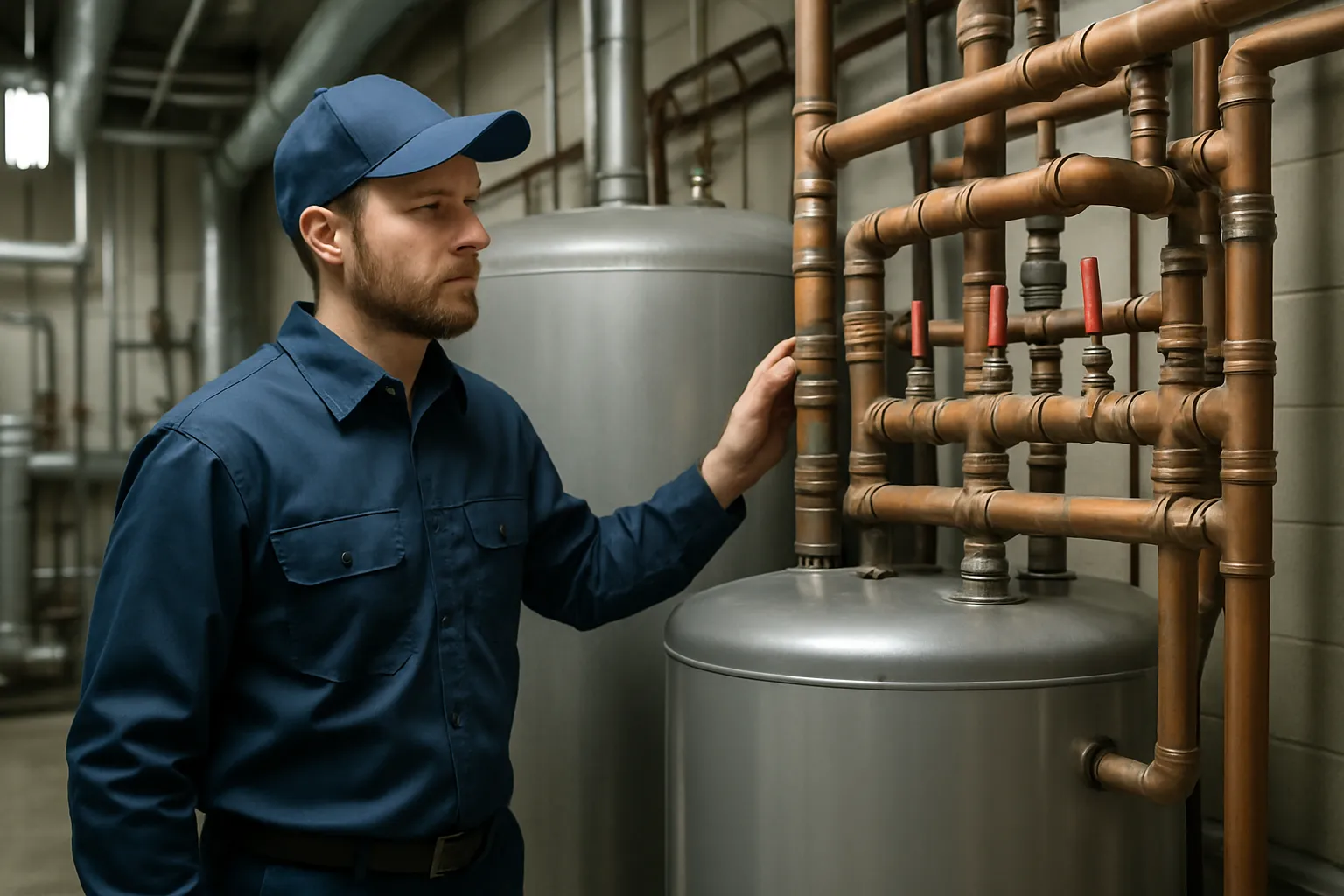
How to choose the right commercial plumbing partner in a tighter market
When demand is up, contractor selection matters more. Building owners should look for plumbing firms with commercial experience in the exact system type involved, whether that is repiping, drain and sewer restoration, pump replacement, code-compliant water heater work, or backflow program management.
Good buyer criteria include proven permit coordination, familiarity with local AHJs, documentation discipline, and the ability to stage work around occupied buildings. The best partners also help owners reduce repeat service calls by addressing root causes rather than patching symptoms.
In a market that is expanding across both renovation and compliance work, the most efficient portfolio strategy is to treat plumbing as an asset-management function. That means planning work before it becomes disruptive, validating code requirements before design starts, and selecting contractors who can support long-term building performance rather than only emergency response.
Frequently Asked Questions
How does plumbing industry growth affect commercial plumbing pricing and availability?
When the market expands, commercial owners often see tighter scheduling, more competition for qualified contractors, and longer lead times for specialty work. That can increase the cost of emergency service and accelerate the need for planned maintenance. The best protection is a portfolio-wide service calendar, prequalified vendors, and early budgeting for code-required replacements.
Which commercial plumbing projects should be prioritized first during a period of higher industry demand?
Prioritize projects that affect safety, compliance, or operational continuity: backflow prevention, water-heater replacement, sewer backups, booster pump issues, grease interceptor service, and recurring leaks. These systems are more likely to cause downtime or code exposure if deferred, especially in occupied office, healthcare, retail, and multifamily properties.
What compliance issues should owners confirm before starting a commercial plumbing retrofit?
Owners should verify the adopted IPC or UPC, local amendments, permit requirements, inspection steps, backflow testing rules, and any applicable ASSE standards or EPA cross-connection control requirements. They should also confirm manufacturer installation instructions, because warranty coverage can depend on approved installation and startup procedures.
How can facilities teams reduce disruption during a major plumbing upgrade?
The most effective approach is phased scheduling, clear shutdown planning, and detailed communication with tenants or operations teams. A strong contractor will map isolation points, sequence work around occupancy hours, and coordinate inspections in advance. That reduces downtime and helps keep the project aligned with permit and closeout requirements.
Does plumbing industry growth change the case for preventative maintenance?
Yes. A busier market makes preventative maintenance more valuable because it reduces the risk of emergency work when contractor availability is limited. For commercial buildings, routine inspections and service logs for drains, valves, pumps, water heaters, and backflow assemblies help extend asset life and support better capital planning.
Related Reading on My Plumbing Tech
- Commercial Electrical Services: A Practical Guide for Plumbing-Heavy Facilities
- Commercial Plumbing Codes, Workforce and Supply Chain Pressures: What the ASA–PHCC Capitol Hill Fly-In Means for Building Owners
Find a Qualified Commercial Plumbing Contractor
Need help acting on this? Browse commercial plumbers in your area, or explore commercial plumbing services like preventative maintenance, inspections, and emergency response. Are you a contractor? List your business on My Plumbing Tech to reach property and facility managers actively searching for help.
Sources
Originally sourced from Climatización y Confort