 My Plumbing Tech
Commercial Leak Detection: A Facility Manager’s Guide to Finding and Fixing Plumbing Leaks
Quick Answers for Property & Facility Managers
How do you detect a water leak in a commercial building?
Start by reviewing water bills and meter data, then record the meter during an off-peak period when fixtures and equipment are shut down. Recheck it after about an hour; unexplained movement indicates flow somewhere in the system. A licensed commercial plumber can isolate zones with submeters, pressure testing, acoustic tools, thermal imaging, camera inspection, or tracer methods.
Why is commercial leak detection important for facility managers?
Commercial leak detection identifies hidden failures before they cause structural damage, mold, tenant disruption, equipment failure, or emergency shutdowns. It also supports water budgeting and maintenance planning. EPA WaterSense recommends meter monitoring, visual and auditory inspections, flow monitoring, and prompt repairs because leaks can represent a meaningful portion of facility water use.
When should a commercial plumbing leak be repaired versus replaced?
Repair a localized failure when the surrounding piping is sound and access is reasonable. Consider repiping or equipment replacement when leaks recur, corrosion is widespread, materials are obsolete, access costs exceed the repair value, or downtime risk is high. Compare the immediate repair with expected repeat service, water damage, energy, code, and tenant-impact costs.
Why Commercial Leak Detection Matters Across a Building Portfolio
Commercial leak detection is a risk-management function, not simply a response to visible water. A concealed leak in an office, retail property, healthcare facility, warehouse, multifamily building, or institutional campus can damage finishes, interrupt tenants, contaminate stored materials, increase utility consumption, and compromise critical operations. Facility managers and property managers should treat abnormal water use, recurring drain backups, unexplained moisture, and pressure changes as investigation triggers.
EPA WaterSense recommends regular meter readings, visual and auditory inspections, flow monitoring, and rapid leak repair. Its commercial guidance also recommends comparing water use during low-demand periods and investigating water that cannot be accounted for by known fixtures or equipment.[1][2] Build leak detection into preventive maintenance, capital planning, tenant coordination, and emergency response rather than waiting for a ceiling stain or flooded mechanical room.
Commercial Leak Detection Checklist for Facility Managers
- Collect at least 12 months of water, sewer, and energy bills and flag unexplained increases, seasonal changes, and post-occupancy anomalies.
- Record the main meter and available submeters during an off-peak period when fixtures, irrigation, cooling equipment, process lines, and cleaning operations are shut down.
- Recheck the meter after approximately one hour and document any unexplained movement or active leak indicator.
- Walk mechanical rooms, restrooms, kitchens, janitor closets, riser rooms, ceilings, parking areas, loading docks, and landscaped areas for moisture, corrosion, pooling, discharge, or staining.
- Review work orders for repeated toilet, valve, water heater, pump, drain, or sewer complaints in the same area.
- Confirm that isolation valves, automatic shutoffs, sensors, alarms, and remote notifications are accessible, labeled, and functional.
- Escalate suspected gas leaks immediately through the building emergency procedure; do not use ignition sources or attempt unqualified testing.
Document the location, affected system, observed conditions, meter readings, photos, occupants affected, and immediate controls. Clear records help vendors scope the work accurately and support repair-versus-replacement decisions.
Step-by-Step Commercial Leak Detection Process
1. Triage the risk
Determine whether the issue involves potable water, hot water, drainage, sewer, gas, fire protection, or process piping. Protect occupants and critical equipment, isolate the affected zone when safe, and coordinate with security, engineering, infection prevention, environmental health, or operations teams where applicable.
2. Establish the leak signature
Compare current meter and pressure data with normal operating conditions. A continuous flow pattern often points to a fixture, valve, underground service, or pressurized distribution leak. A leak that appears only during equipment operation may involve a water heater, boiler make-up line, cooling system, pump seal, process connection, or relief discharge.
3. Isolate systematically
Use shutoff valves, branch meters, pressure zones, and equipment isolation points to narrow the search. A commercial plumber may use acoustic listening equipment, infrared or thermal imaging, pressure testing, dye or tracer methods, moisture meters, and electronic flow monitoring. Testing should account for normal demand, temperature changes, pressure-reducing valves, expansion tanks, and backflow assemblies.
4. Verify before opening walls or floors
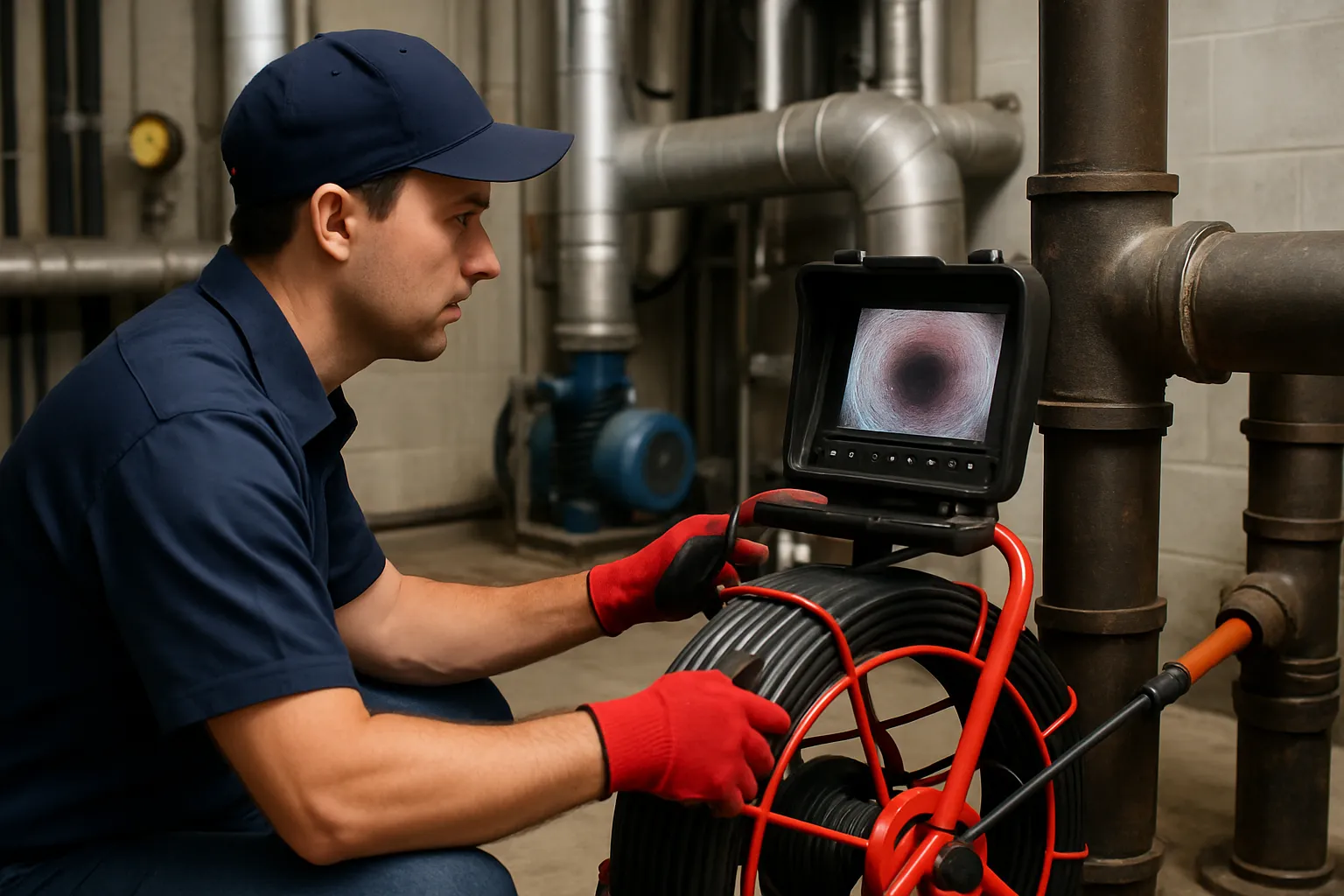
Confirm the source and route as closely as possible before demolition. For drain and sewer systems, use a properly scoped camera inspection and flow testing to identify cracks, displaced joints, root intrusion, grease restrictions, sags, or collapsed sections. For buried services, coordinate utility locating, access planning, traffic control, and excavation risk management.
5. Repair, monitor, and close out
After repair, restore the system gradually, check operating pressure and flow, inspect adjacent areas for renewed moisture, and repeat the original diagnostic test. Capture photos, readings, materials, permits, test certificates, affected assets, and recommended follow-up work in the building maintenance record.
System-Specific Commercial Plumbing Leak Risks
Water supply and distribution: Inspect risers, branch piping, valves, flexible connectors, pressure-reducing valves, water meters, expansion tanks, and concealed connections. Copper pitting, corrosion, freeze damage, failed joints, and underground service leaks may require acoustic locating or pressure-zone isolation. In older buildings with repeated failures, compare spot repairs with phased repiping.
Drain and sewer: A drain leak may appear as staining, odor, recurring blockage, or moisture below a fixture rather than as continuous meter flow. Coordinate camera inspection, smoke or water testing where appropriate, hydro jetting for confirmed buildup, and sewer line repair for broken or displaced pipe. Do not treat repeated backups as only a cleaning issue when structural defects remain.
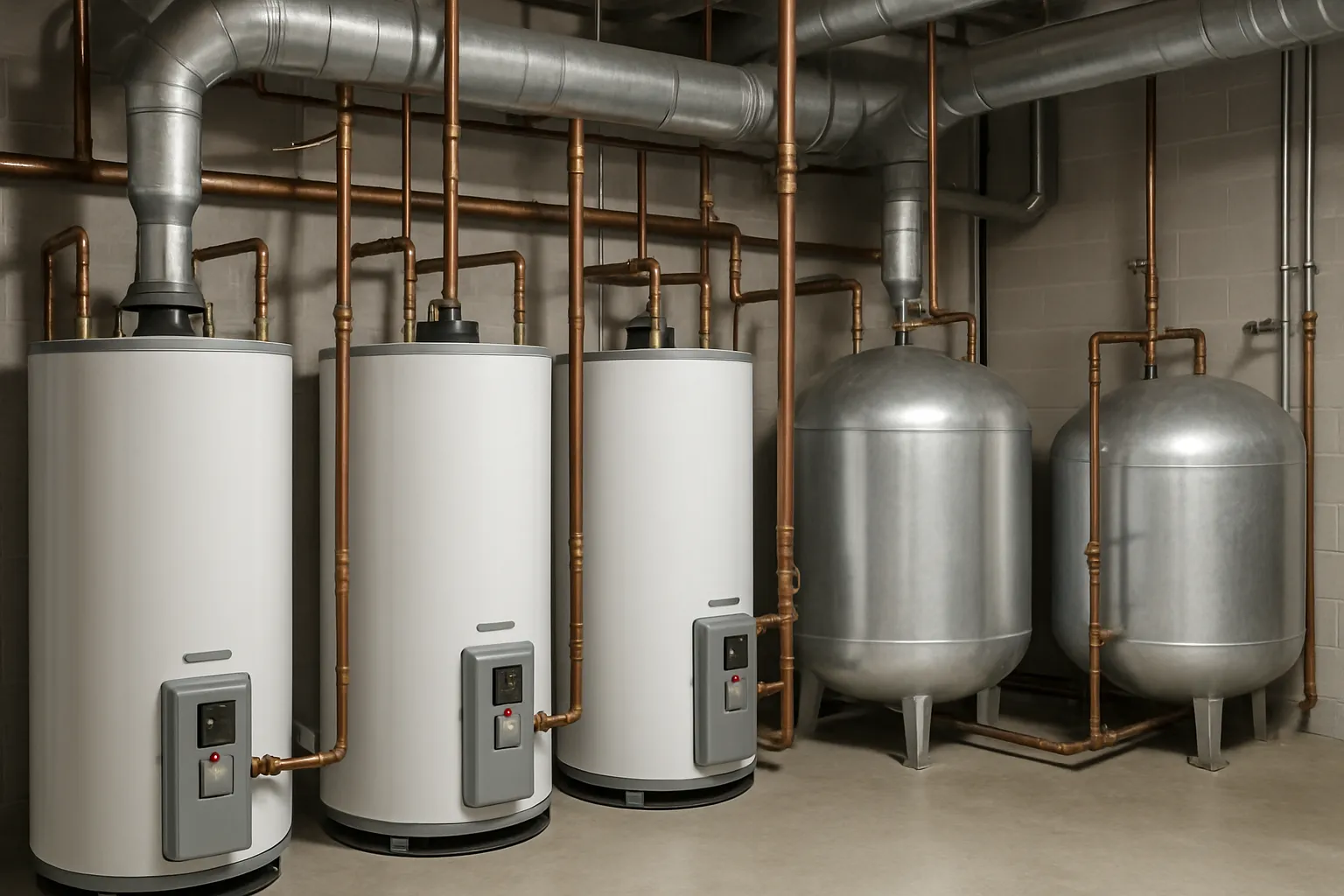
Commercial water heaters and tankless systems: Check tanks, heat exchangers, relief valves, drain valves, recirculation lines, unions, pumps, and condensate or discharge piping. A leaking tank, recurring relief discharge, scale-related failure, or unavailable replacement parts may justify replacement. For tankless equipment, verify flow sensors, isolation valves, heat exchangers, and manufacturer-required service clearances.
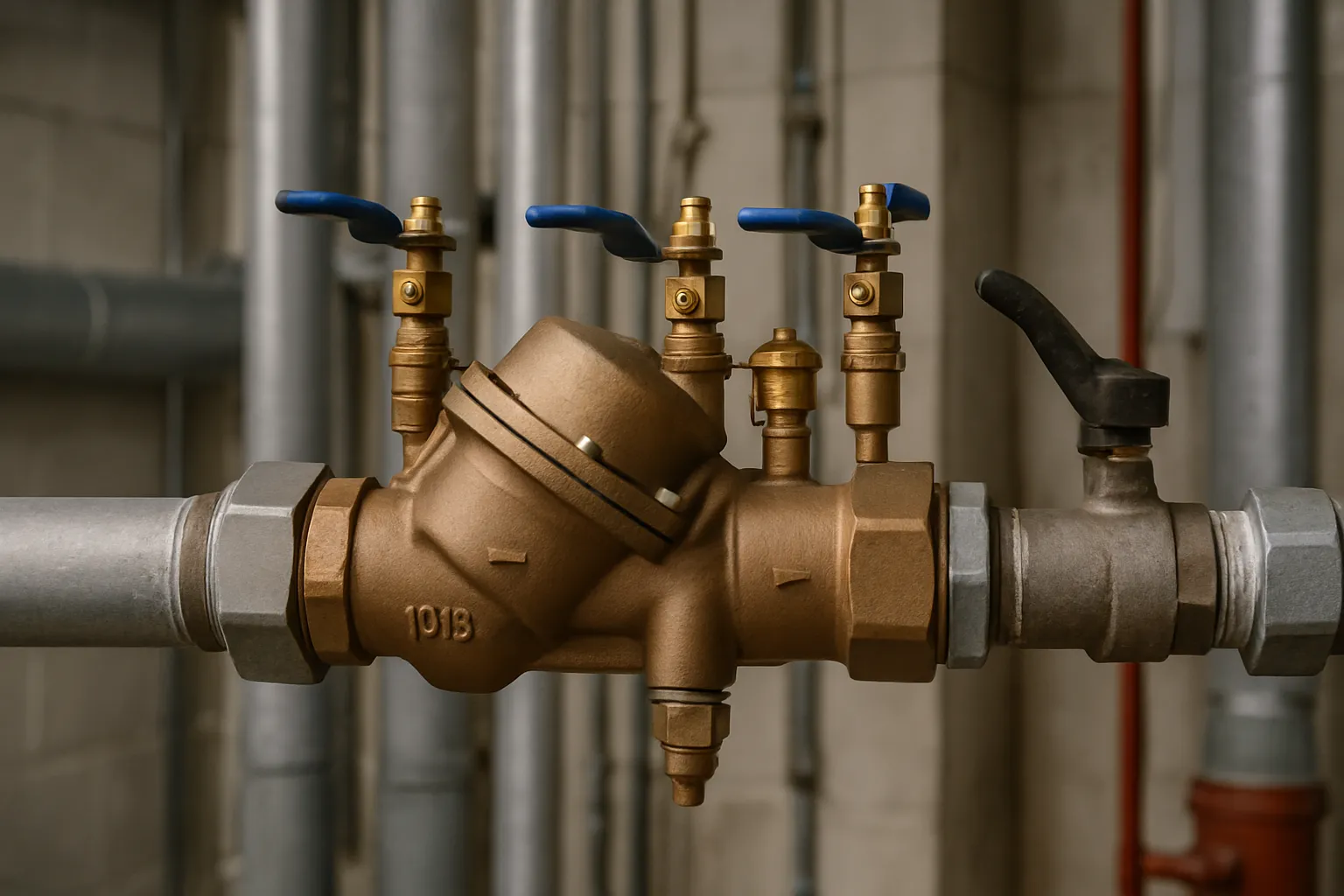
Backflow prevention: Leaks around an assembly may indicate worn checks, relief discharge, improper installation, freezing, or pressure conditions. Backflow assemblies must be selected, installed, maintained, and tested according to the adopted code and local program. The IPC requires applicable testable assemblies to be tested at installation, after repair or relocation, and at least annually by a qualified tester under the applicable procedures.[6]
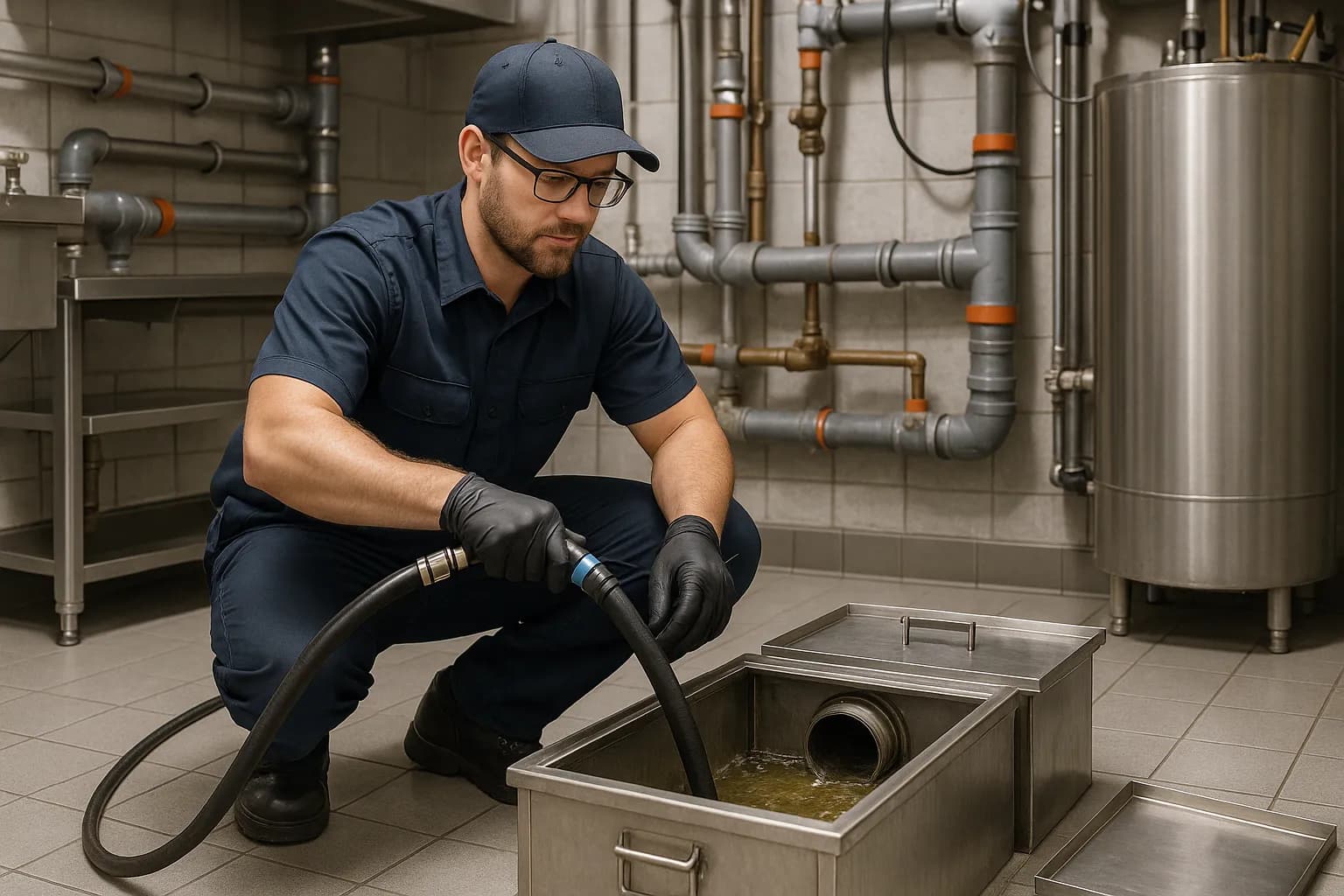
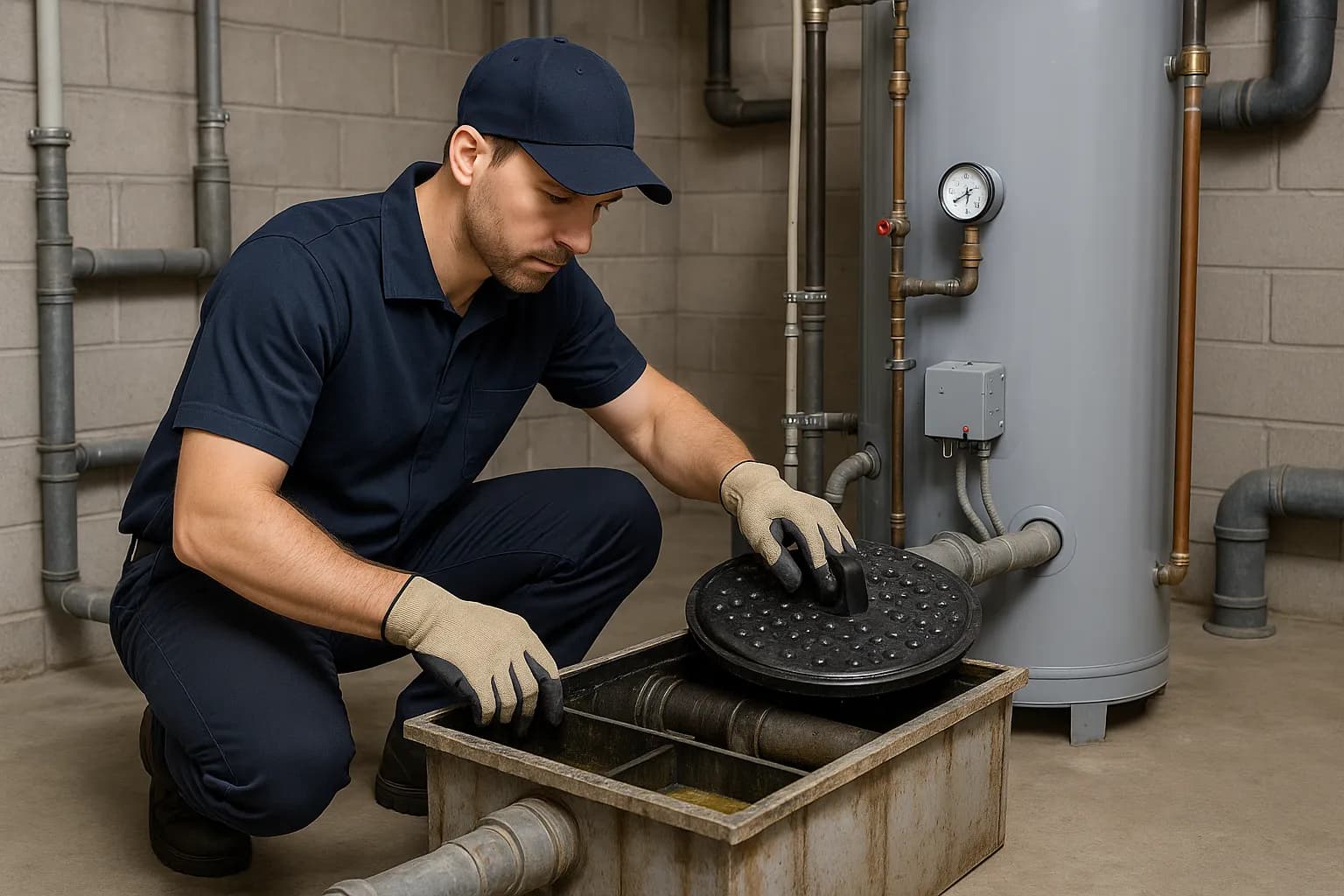
Grease interceptors: Overflow, odor, slow drainage, and wet soil near an interceptor may indicate capacity, maintenance, baffle, lid, piping, or structural problems. Confirm kitchen usage, fixture connections, access, pumping records, flow conditions, and local requirements. IPC provisions determine interceptor capacity using factors such as peak drain flow and retention time.[7]
Gas piping: Gas odor, unexplained combustion changes, pressure irregularity, or suspected pipe damage requires immediate emergency escalation and qualified utility or licensed plumbing response. Gas piping work, pressure testing, appliance connections, corrosion evaluation, and code compliance should be handled by authorized professionals under the adopted fuel-gas code and utility requirements.
Choosing Repair, Preventive Maintenance, or Full Replacement
A localized repair is usually appropriate when the failure is isolated, the pipe or equipment is in good condition, access is controlled, and the repair will not create disproportionate operational disruption. Preventive maintenance is the better investment when inspection reveals developing corrosion, scale, loose connections, recurring valve problems, poor drain performance, or unmonitored equipment flow.
Full replacement or repiping deserves consideration when failures recur across a system, materials are broadly deteriorated, the asset is beyond its useful service strategy, parts are unavailable, or emergency access would affect tenants, healthcare operations, inventory, or business continuity. Compare more than the contractor proposal: include water and energy waste, restoration, mold response, overtime, tenant claims, regulatory exposure, production interruption, and the probability of another failure.
For larger properties, use a phased capital plan: first protect critical zones and high-consequence assets, then address accessible failures, then replace concealed or aging infrastructure during planned renovations. Submeters and flow monitoring can help verify savings and identify abnormal use on cooling towers, reverse-osmosis systems, boiler make-up lines, irrigation, kitchens, and other major users.[1][2]
How to Specify and Buy Commercial Leak Detection Services
- Provide building drawings, riser diagrams, meter locations, access rules, tenant schedules, prior reports, and recent utility data.
- Ask the contractor to identify the suspected system, diagnostic method, limitations, access requirements, and whether destructive investigation is included.
- Require written findings that distinguish confirmed source, probable route, contributing condition, recommended repair, urgency, and replacement alternatives.
- Confirm licensing, insurance, safety procedures, permits, after-hours response, restoration coordination, and experience with comparable building types.
- For backflow, gas, sewer, or regulated equipment, request applicable test reports, inspection records, and documentation required by the authority having jurisdiction.
- Use measurable closeout criteria: stable meter readings, verified pressure, successful operational testing, no renewed moisture, clear photos, and updated asset records.
The strongest commercial leak detection program combines routine observation with data, qualified diagnostics, prompt repairs, and lifecycle planning. For facility managers and commercial real estate professionals, that approach reduces surprise failures while creating defensible maintenance records and a clearer basis for capital decisions.
Frequently Asked Questions
How much does commercial leak detection cost?
Pricing depends on building size, access, system type, urgency, and whether the source is above-grade, concealed, underground, sewer-related, or gas-related. Request a diagnostic proposal that separates investigation, emergency isolation, opening and restoration, repair, testing, and monitoring. The lowest inspection price is not always the lowest total cost if an incomplete diagnosis leads to repeated demolition or emergency work.
Can water submeters and automatic shutoff devices improve commercial leak response?
Yes. Submeters can separate use by tenant area, process, floor, irrigation zone, cooling equipment, or other major user. Flow monitors can identify abnormal demand and send alerts, while sensor-activated shutoff valves may limit damage when configured correctly. EPA WaterSense recommends monitoring major water users and using failure-abatement technology where abnormal flow can signal malfunction or leakage.[1][2]
What commercial building areas should be prioritized for leak detection?
Prioritize high-consequence and high-use areas: mechanical rooms, risers, kitchens, restrooms, water heater rooms, boiler and cooling equipment, healthcare spaces, tenant improvement zones, underground services, loading areas, and sewer or grease-interceptor connections. Rank each area by failure probability, property damage potential, business interruption, occupant risk, and difficulty of emergency access.
How can leak detection support commercial plumbing code compliance?
Leak detection does not replace code inspection, permitting, or required testing, but it can reveal conditions that require corrective work. Coordinate findings with the adopted IPC or UPC, local amendments, utility requirements, fuel-gas rules, health regulations, and authority-having-jurisdiction procedures. Maintain records for backflow tests, repairs, pressure tests, permits, and commissioning where required.
What is the ROI of a commercial leak detection program?
ROI comes from avoided water and sewer charges, reduced emergency labor, less property damage, fewer tenant interruptions, lower restoration costs, and longer asset life. EPA WaterSense reports that leaks can account for more than 6 percent of facility water use and recommends prompt repair after detection.[3] Calculate the business case from the building’s own bills, incident history, repair costs, and criticality of affected operations.
Related Reading on My Plumbing Tech
- Nimlas Acquisition of Erling Olsen Strengthens Commercial Plumbing in Norway
- What Is Hydro Jetting? A Commercial Drain and Sewer Guide
Find a Qualified Commercial Plumbing Contractor
Need help acting on this? Browse commercial plumbers in your area, or explore commercial plumbing services like preventative maintenance, inspections, and emergency response. Are you a contractor? List your business on My Plumbing Tech to reach property and facility managers actively searching for help.