 My Plumbing Tech
Commercial Water Heater Replacement: A Facility Manager’s Guide
Quick Answers for Property & Facility Managers
How do you know when a commercial water heater needs replacement?
Replace a commercial water heater when the tank is leaking, corrosion is extensive, hot-water capacity is unreliable, repairs are recurring, or required parts are unavailable. Facility managers should compare the cost and operational risk of another repair with a properly sized replacement, while reviewing efficiency, venting, gas, electrical, drainage, and local code requirements.
What should be included in a commercial water heater replacement plan?
A complete plan includes demand and recovery calculations, equipment selection, shutdown and temporary-hot-water procedures, gas or electrical capacity, venting, condensate drainage, expansion control, temperature regulation, backflow protection, permits, commissioning, and a maintenance schedule. Coordinate the work with tenants, infection-control teams, food-service operators, and building operations.
Is a tankless system suitable for a commercial building?
Tankless equipment can suit offices, retail properties, healthcare facilities, warehouses, and multifamily buildings when the design supports required flow, temperature rise, redundancy, gas or electrical capacity, venting, and maintenance access. Multiple units may be staged in a rack for capacity and backup, but a storage or hybrid system may better handle large simultaneous demand.
Start Commercial Water Heater Replacement With a Building-Specific Assessment
Commercial water heater replacement is not simply a tank-for-tank installation. Facility managers, property managers, and commercial real estate professionals must protect hot-water availability while coordinating plumbing, mechanical, electrical, gas, life-safety, and tenant requirements. Start with an asset assessment covering age, model, fuel type, rated input, storage capacity, recovery performance, service history, leak history, and current operating temperature.
Document when demand peaks, which fixtures use hot water, and whether the building includes kitchens, healthcare spaces, laundry, showers, laboratories, manufacturing processes, or multifamily units. Inspect the equipment room for corrosion, floor-drain condition, seismic or anchorage needs where applicable, access limitations, combustion air, venting, electrical service, gas-piping capacity, and clearance requirements.
- Photograph the existing installation, nameplate, valves, controls, vent, gas piping, wiring, and nearby drains.
- Record hot-water complaints, temperature fluctuations, recovery delays, and after-hours outages.
- Review maintenance invoices and identify repeated burner, element, valve, anode, control, or leak repairs.
- Confirm whether the replacement must remain operational during phased construction.
Choose Repair, Planned Maintenance, or Full Commercial Water Heater Replacement
A repair may be appropriate when the tank or heat exchanger remains sound and the failure involves an isolated component such as a thermostat, control, burner assembly, relief valve, heating element, or recirculation pump. Maintenance can extend service life when technicians flush sediment, inspect combustion, test safety controls, verify temperature, and maintain anodes and strainers according to the manufacturer’s requirements.
Full commercial water heater replacement becomes the stronger business decision when the vessel leaks, corrosion is widespread, failures recur, capacity no longer matches the building, operating costs are excessive, or obsolete equipment creates parts and compliance risk. Compare the repair estimate with outage exposure, emergency labor, water damage, tenant disruption, and the probability of another failure. A planned project generally gives the owner more control over equipment selection, scheduling, permits, and temporary service.
For financial evaluation, compare installed cost, expected energy consumption, maintenance requirements, useful service life, incentives available in the jurisdiction, and avoided emergency costs. Do not promise a fixed payback without utility rates, load data, operating hours, and equipment performance. A qualified commercial plumber or mechanical engineer can model lifecycle cost rather than relying only on purchase price.
Size Storage, Tankless, and Hybrid Systems for Commercial Demand
Specify equipment from measured or defensible demand rather than replacing the existing capacity automatically. Review peak-hour demand, simultaneous fixtures, required delivery temperature, incoming-water temperature, recovery rate, storage volume, recirculation losses, and process loads. Undersizing creates complaints and production interruptions; oversizing can increase capital cost, standby losses, space requirements, and fuel or electrical demand.
Commercial storage water heaters provide a reserve for concentrated demand and may simplify operation in buildings with kitchens, showers, healthcare services, or multiple tenant suites. Tankless and commercial instantaneous systems can reduce standby losses and support modular redundancy, but they require adequate flow, minimum activation flow, fuel or electrical service, venting, water quality, and maintenance access. Hybrid designs can combine storage and high-recovery equipment to balance peak demand and efficiency.
When selecting gas equipment, verify input capacity, combustion air, vent category, material compatibility, termination location, condensate management, and gas-train requirements. Federal standards for commercial equipment include efficiency and standby-loss requirements; DOE rules specify amended standards for equipment manufactured on or after October 6, 2026, so confirm the applicable manufacturing date and current enforcement status before procurement.[1][2]
- Request a written load calculation and equipment schedule.
- Compare single-unit and staged-redundancy designs for critical buildings.
- Confirm manufacturer clearances, service access, warranty conditions, and water-quality limits.
- Specify controls that integrate with the building automation system when useful.
Coordinate Water Supply, Distribution, Drain, and Sewer Connections
Replacement planning must address the connected Water Supply / Distribution system. Inspect the cold-water service, isolation valves, unions, pressure-reducing valves, expansion tank, mixing valve, recirculation loop, balancing valves, pumps, and pipe supports. Confirm that existing piping can handle the new flow and operating pressure. Replace inaccessible or severely corroded valves during the planned shutdown rather than waiting for a second outage.
Hot-water recirculation is especially important in offices, healthcare buildings, hotels, multifamily properties, and large institutional facilities. Verify pump sizing, check valves, temperature balance, insulation, and controls. Design temperature management to reduce scald risk while meeting operational requirements and applicable local plumbing provisions.
Review the Drain & Sewer route before installation. Temperature-and-pressure relief discharge, tank drains, condensate, neutralizer discharge, equipment drains, and floor drains must be routed to approved locations without creating cross-connections or unsafe discharge conditions. Condensing gas equipment may require corrosion-resistant drainage, neutralization, and a condensate pump where gravity drainage is unavailable.[4]
Check Backflow Prevention, Gas Piping, and Related Plumbing Systems
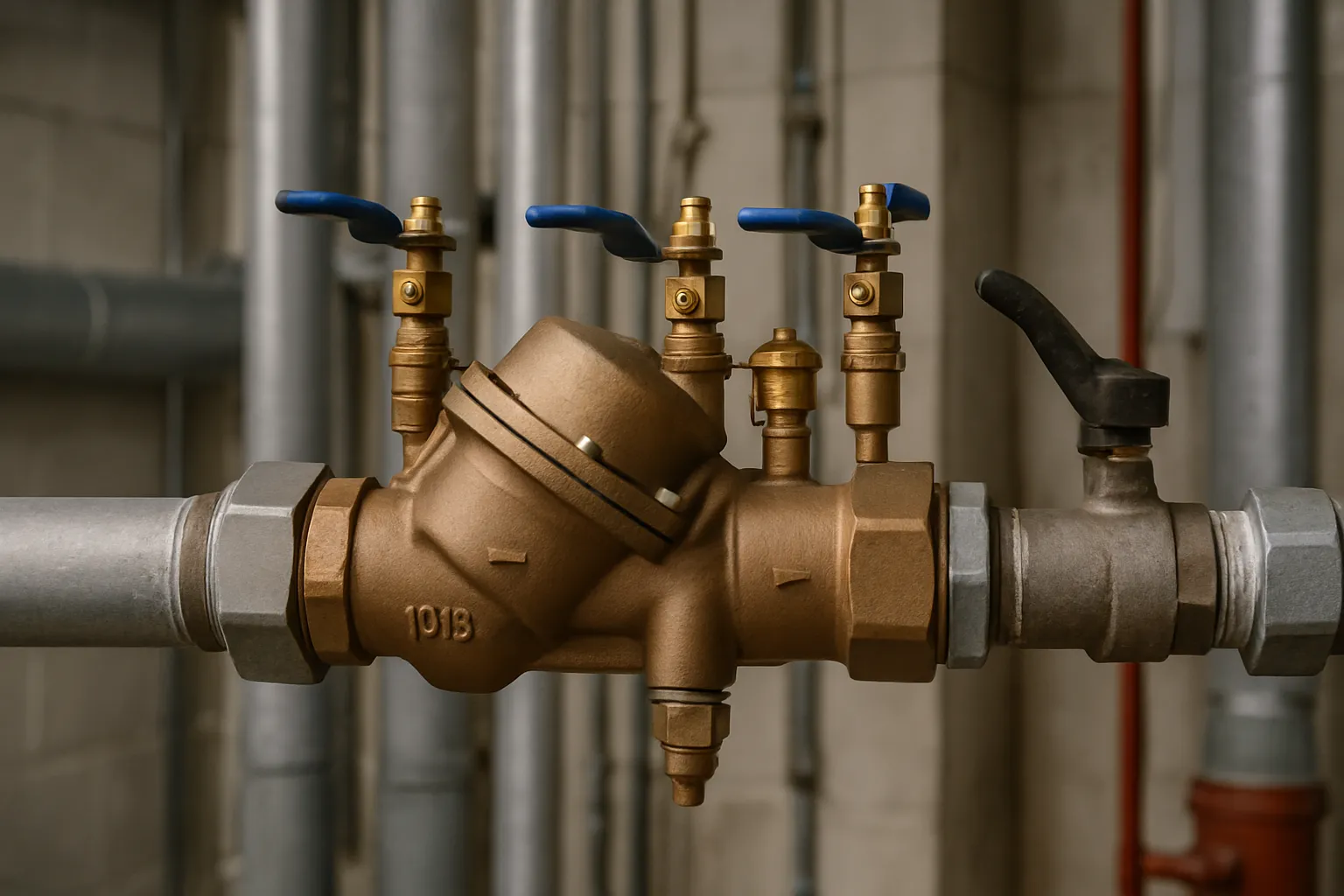
Changes to a commercial hot-water system can affect Backflow Prevention. Confirm whether the installation includes a check valve, backflow preventer, reduced-pressure assembly, dedicated make-up connection, or other protected connection. A backflow device can change hydraulic behavior and increase thermal-expansion pressure, so verify expansion control and test requirements with the authority having jurisdiction and a qualified tester.
Gas Piping requires a documented review of available pressure, pipe sizing, regulator capacity, shutoff location, sediment trap requirements, combustion air, and leak testing. Do not assume the existing branch can supply a higher-input replacement. Coordinate gas work with the licensed trade responsible for the building and secure required permits and inspections.
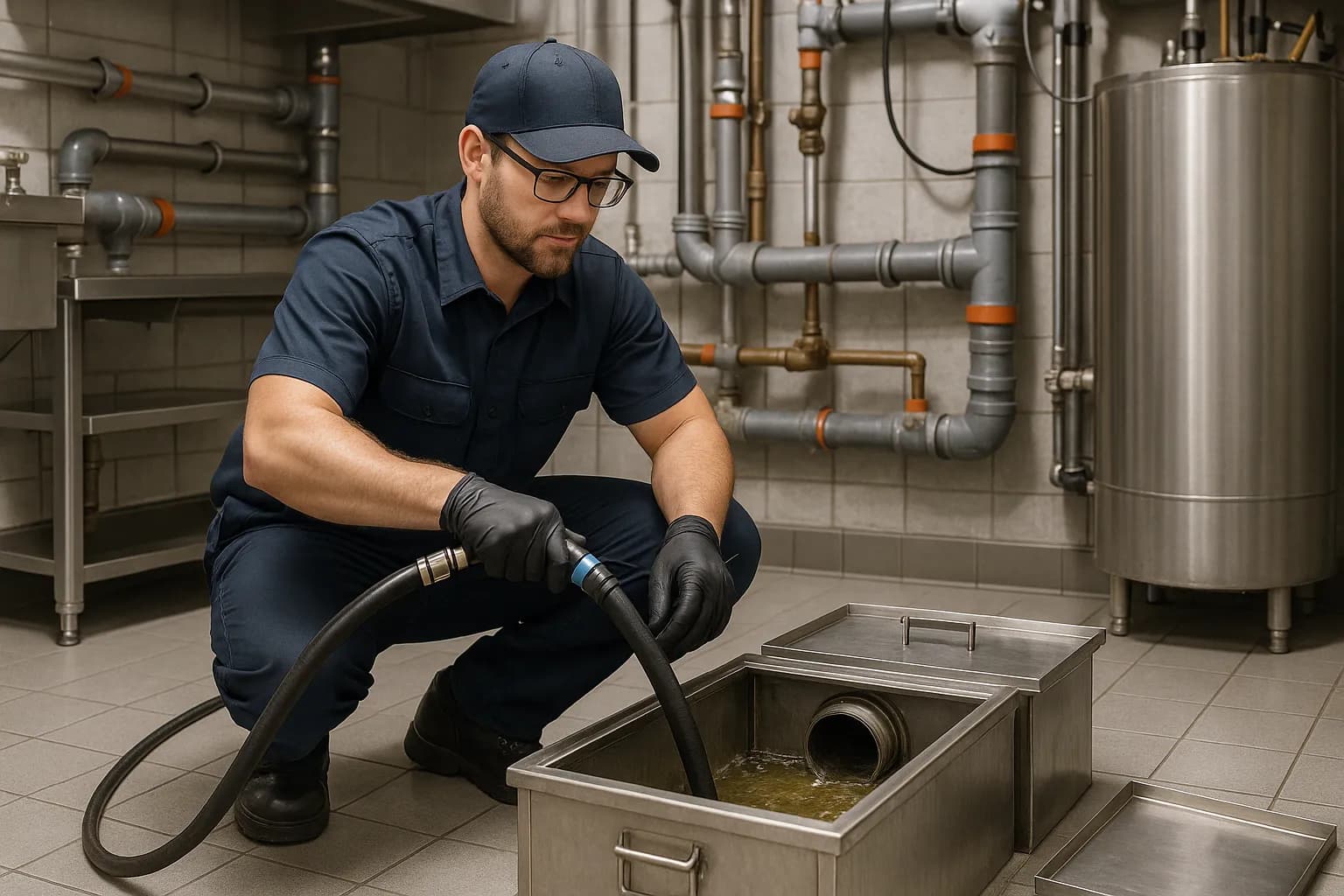
Other systems may affect the project. Food-service sites may need Grease Interceptors protected from improper hot-water discharge and drainage changes. Buildings with sump or lift stations require reliable routing for equipment-room drainage and condensate. Hydro jetting or sewer line repair may be appropriate if an existing drain is blocked, undersized, or structurally damaged before the replacement work begins.
Manage the Commercial Water Heater Replacement Project in Phases
A controlled installation reduces tenant disruption and protects business continuity. For a small office or retail suite, the work may involve one replacement and a short shutdown. A warehouse, healthcare campus, multifamily property, or institutional building may require temporary hot-water service, phased equipment replacement, redundant units, night work, infection-control coordination, or a multi-week mechanical schedule.
- Define the scope, performance requirements, budget, outage limits, and responsible decision-makers.
- Obtain site measurements, load information, utility data, equipment submittals, permits, and required engineering review.
- Coordinate shutdown notices, temporary hot-water provisions, tenant access, security, infection-control procedures, and fire-watch requirements where applicable.
- Isolate and drain the existing equipment safely, protect adjacent finishes, and verify that all connected systems are secured.
- Install the replacement with approved supports, valves, piping, relief protection, venting, gas or electrical connections, drains, condensate management, and insulation.
- Flush and disinfect piping when required by the building’s use or governing procedures, then verify water quality and temperature.
- Commission the system by testing controls, safeties, flow, recovery, recirculation, relief discharge, leak tightness, combustion, alarms, and building-automation points.
- Deliver as-built information, warranties, manuals, test records, permit closeout, recommended spare parts, and a preventive-maintenance calendar.
Use a Commercial Replacement Checklist to Protect ROI and Compliance
Before approving closeout, facility managers should confirm that the installed equipment matches the approved submittal and that operators understand normal and emergency procedures. Keep records of model and serial numbers, efficiency ratings, input, capacity, setpoints, test results, valve locations, filter or strainer locations, and service intervals.
- Capacity: Demand, recovery, storage, redundancy, and recirculation requirements are documented.
- Safety: Relief protection, temperature control, combustion, electrical protection, anchorage, and clearances are verified.
- Water: Isolation valves, expansion control, backflow protection, mixing, flushing, and leak inspection are complete.
- Drainage: Floor drains, relief discharge, condensate, neutralizer, sump, and lift-station connections are approved and functional.
- Compliance: Permits, inspections, local IPC or UPC amendments, manufacturer instructions, and utility requirements are satisfied.
- Operations: Staff receive an emergency shutoff map, maintenance schedule, warranty information, and escalation contacts.
Schedule follow-up inspections after startup and during the first operating cycle. Trend complaints, temperature stability, runtime, alarms, fuel or electrical use, and maintenance events. Those records help owners determine whether the replacement is delivering the expected reliability and lifecycle value.
Frequently Asked Questions
How much does commercial water heater replacement cost?
Commercial water heater replacement cost varies widely with capacity, fuel type, equipment efficiency, venting, gas or electrical upgrades, access, controls, permits, seismic requirements, condensate drainage, and whether multiple units are installed. Request an itemized proposal separating equipment, demolition, piping, electrical, gas, venting, drainage, commissioning, permits, and temporary service. Evaluate total lifecycle cost and outage risk, not only the quoted equipment price.
Should a commercial building replace one water heater or install a redundant system?
Redundancy is often justified where hot water supports healthcare operations, food service, multifamily occupancy, employee welfare, manufacturing, or critical institutional functions. Staged storage or tankless units can allow partial service during maintenance and reduce single-point failure risk. The correct design depends on peak demand, available space, utility capacity, controls, maintenance staffing, and the operational consequence of losing hot water.
How do new commercial water heater efficiency standards affect replacement planning?
Federal commercial equipment standards include efficiency and standby-loss requirements, and DOE lists amended requirements for equipment manufactured on or after October 6, 2026.[1][2] Higher-efficiency gas equipment may require condensing technology, compatible Category IV venting, condensate drainage, neutralization, and electrical controls.[4] Confirm the applicable rule, manufacturing date, local adoption, and enforcement status before ordering equipment.
What plumbing code issues should be reviewed during commercial water heater replacement?
Review local plumbing and mechanical code provisions for relief valves, discharge piping, temperature control, expansion, backflow prevention, combustion air, venting, gas piping, electrical connections, drains, equipment clearances, supports, accessibility, and seismic restraint where applicable. The authority having jurisdiction determines adopted code requirements. Use licensed contractors and obtain permits before work begins.
When is tankless commercial water heating better than storage equipment?
Tankless equipment can be effective when the building has variable demand, limited equipment-room space, adequate gas or electrical capacity, suitable water quality, and a design that manages flow and temperature rise. Multiple units can provide staging and partial redundancy. Storage equipment may be preferable for large simultaneous draws, process loads, healthcare demands, or applications where reserve capacity is more valuable than reduced standby losses.
How can property managers reduce disruption during replacement?
Plan the outage around occupancy and production schedules, notify tenants early, isolate work zones, stage equipment and materials before shutdown, and provide temporary hot-water service when required. Use phased replacement or redundant units for larger properties. Coordinate with food-service, healthcare, laboratory, and industrial operators, and require commissioning records before returning the system to normal operation.
Related Reading on My Plumbing Tech
- Commercial Plumbing Acquisition: Boyd Plumbing Acquired by C M Kelly Inc.
- Lift Station Maintenance: A Commercial Facility Manager’s Complete Guide
Find a Qualified Commercial Plumbing Contractor
Need help acting on this? Browse commercial plumbers in your area, or explore commercial plumbing services like preventative maintenance, inspections, and emergency response. Are you a contractor? List your business on My Plumbing Tech to reach property and facility managers actively searching for help.