 My Plumbing Tech
Commercial Plumbing Industry News: mSupply, Pipe Restoration, IAPMO, and More
Quick Answers for Property & Facility Managers
What commercial plumbing industry news should facility managers know about?
Recent updates include Phil Mause becoming president of mSupply, Bailey Burke joining Pipe Restoration to expand ePIPE and eDRAIN coverage in Washington, D.C., Maryland, and Virginia, and Navien opening an upgraded New Jersey Training Academy. General Pipe Cleaners and the PHCC Educational Foundation also announced organizational and workforce-development updates.
How could these plumbing industry changes affect commercial building projects?
The announcements may improve access to pipe restoration expertise, manufacturer training, distribution support, and qualified plumbing talent. Property and facility managers should still evaluate each vendor’s licensing, local coverage, product compatibility, warranties, code knowledge, emergency response capacity, and ability to coordinate permits and inspections with the local authority having jurisdiction.
Why should commercial real estate professionals monitor plumbing industry news?
Industry changes can affect project availability, procurement, technical support, and lifecycle planning for commercial plumbing systems. Tracking supplier leadership, restoration coverage, training resources, and workforce development helps owners and managers reduce operational risk when planning water-heater replacements, sewer work, repiping, backflow compliance, and other capital improvements.
Commercial Plumbing News Signals Changes in Support and Procurement
A recent industry roundup from Plumber Magazine highlights developments involving mSupply, Pipe Restoration, IAPMO, Navien, General Pipe Cleaners, and the PHCC Educational Foundation. For facility managers, property managers, and commercial real estate professionals, the significance is practical: supplier leadership, regional restoration coverage, technical training, and workforce development can influence how efficiently building plumbing projects are specified, scheduled, and maintained.
These announcements do not replace project-specific due diligence. Commercial plumbing decisions still require review of the applicable IPC (International Plumbing Code) or UPC (Uniform Plumbing Code), local amendments, permit and inspection requirements, manufacturer instructions, and the requirements of the local AHJ. They also show why owners should maintain dependable relationships with qualified commercial plumbing contractors, distributors, engineers, and manufacturers.
mSupply Leadership Change May Affect Commercial Plumbing Distribution
mSupply named Phil Mause president. According to Plumber Magazine, Mause joined the company in 2024 as chief commercial officer and led changes to its sales go-to-market strategy. In his new role, he will lead an organization spanning sales, operations, supply chain, digital, e-commerce, marketing, and merchandising.
For commercial buyers, leadership across those functions can matter because plumbing procurement involves more than product price. A hospital, office portfolio, warehouse, multifamily property, or industrial facility may need coordinated access to valves, pumps, water heaters, backflow assemblies, drainage products, repair materials, and replacement components. Distribution performance can affect lead times, substitutions, emergency response, and the ability of a contractor to keep a critical repair moving.
Property managers should review whether preferred suppliers can support documented product approvals, compatible replacement parts, traceable submittals, and delivery requirements. For water distribution, commercial water heaters, booster pumps, gas piping, and backflow assemblies, product selection must remain consistent with the design, applicable code, the manufacturer’s installation requirements, and the AHJ’s approval process.
Pipe Restoration Expands ePIPE and eDRAIN Coverage in the Mid-Atlantic
Pipe Restoration welcomed Bailey Burke to support the Washington, D.C., Maryland, and Virginia markets and expand access to ePIPE and eDRAIN solutions. These technologies are associated with internal pipe and drain restoration applications, which can be relevant when conventional excavation, demolition, or full replacement would disrupt occupied commercial space.
For facility managers, restoration is not automatically the right answer. The decision should begin with a condition assessment that identifies pipe material, diameter, access points, corrosion or leakage patterns, flow requirements, existing coatings or lining, and the cause of failure. Building use also matters. A healthcare facility, food-service property, laboratory, school, retail center, and multifamily building may have different shutdown tolerances, sanitation requirements, tenant coordination needs, and risk profiles.
Managers evaluating ePIPE, eDRAIN, or another restoration system should request written information on approved applications, substrate preparation, cure requirements, service-temperature limits, chemical exposure, expected design life, warranty terms, inspection procedures, and code or listing documentation. The contractor should also explain how the work will be verified and how restored sections will be documented for the owner’s records.
Restoration work must be coordinated with permits and inspections when required. It should also include protection of occupied areas, confined-space planning where applicable, ventilation, access control, and worker-safety procedures consistent with OSHA requirements. A restoration option can reduce demolition, but it still requires disciplined project management and commissioning.
Navien’s Upgraded New Jersey Training Academy Supports Technical Education
Navien opened an upgraded New Jersey Training Academy with expanded classrooms and hands-on training covering plumbing, HVAC, and water-treatment products. The facility provides access to technical education for contractors, distributors, sales representatives, and other industry professionals.
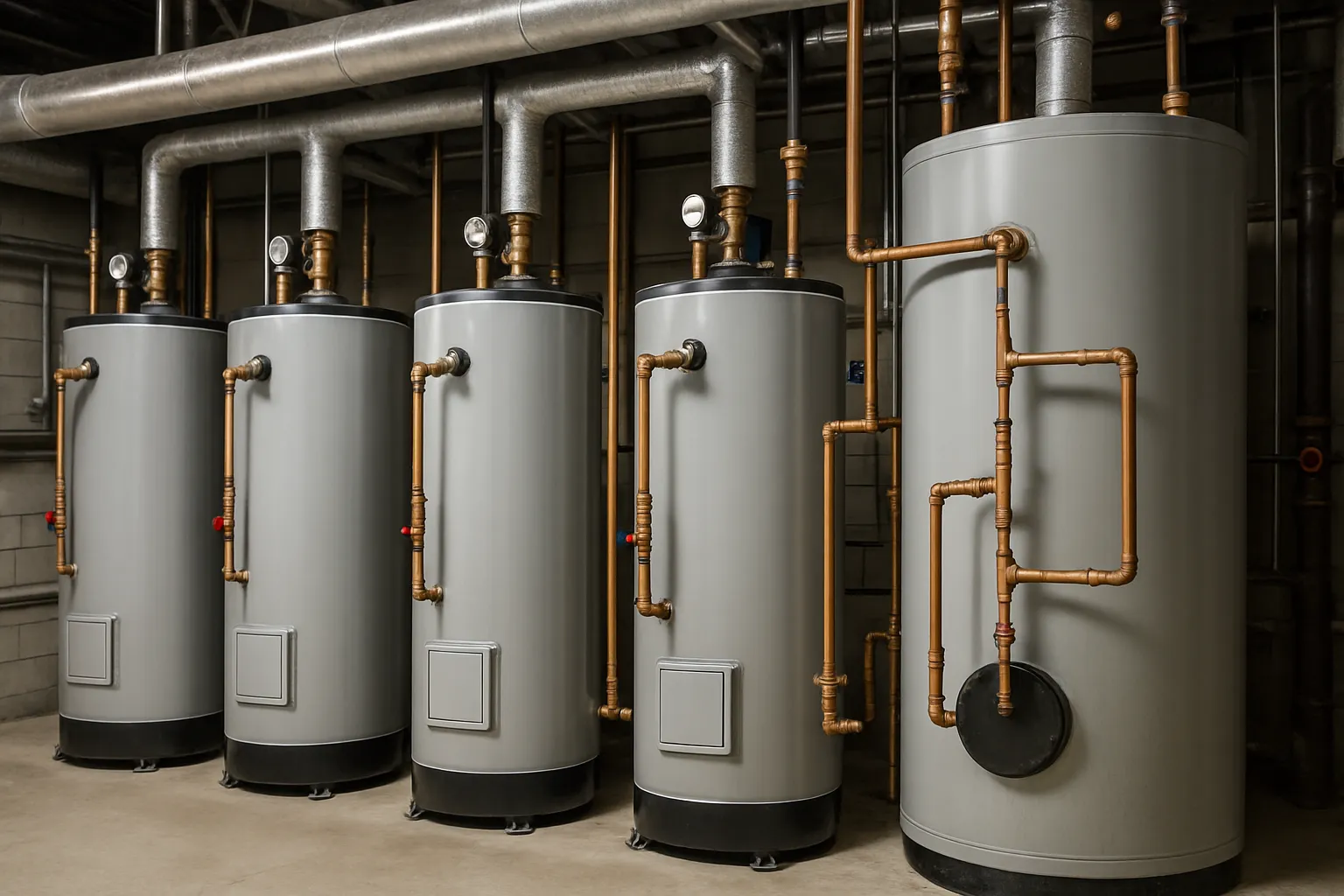
Facility managers benefit when service providers understand the equipment installed in their buildings. Commercial water-heating systems may include storage tanks, tankless units, recirculation loops, mixing valves, pumps, controls, venting, gas piping, and water-treatment components. Incorrect sizing, poor commissioning, inadequate combustion-air provisions, improper venting, or neglected maintenance can affect reliability, energy performance, occupant service, and warranty protection.
Owners should ask prospective contractors how technicians are trained on the equipment they service and whether the firm can provide commissioning documentation, maintenance schedules, water-quality recommendations, control settings, and manufacturer-required records. Training is valuable, but it does not replace licensing, code compliance, permits, inspections, or the contractor’s responsibility to follow the equipment manufacturer’s instructions.
General Pipe Cleaners and PHCC Updates Highlight Workforce Planning
The roundup also includes leadership changes at General Pipe Cleaners and the PHCC Educational Foundation’s 2026 scholarship recipients. The foundation announced 80 scholarship recipients receiving funding totaling up to $200,000; recipients included apprentices, trade-school students, and college students pursuing plumbing, HVAC, or related studies.
For commercial property organizations, workforce development is an operational issue. A shortage of qualified personnel can affect preventive maintenance, emergency response, sewer inspection, hydro jetting, leak detection, backflow testing, lift-station service, and capital-project scheduling. Owners should avoid selecting vendors based only on the lowest bid and instead assess staffing depth, supervision, licensing, continuing education, safety practices, and documented experience with comparable buildings.
Long-term service agreements should define response times, escalation procedures, reporting, after-hours coverage, inspection documentation, and access to replacement parts. For portfolios with multiple properties, standardized asset records can help the owner identify aging water heaters, recurring drain blockages, failed backflow devices, corroded domestic-water piping, and sump or lift-station risks before they become major interruptions.
Code, Backflow, and Manufacturer Requirements Still Govern Projects
Industry news does not change the compliance obligations attached to a commercial plumbing project. Domestic-water systems, sanitary drainage, storm drainage, gas piping, grease interceptors, and specialty systems must be designed and installed under the governing code adopted by the jurisdiction. Depending on location and project scope, that may involve the IPC, UPC, local amendments, plumbing permits, plan review, inspections, and AHJ approval.
Backflow prevention requires particular attention in commercial buildings. Cross-connection control programs may require approved assemblies, installation in accessible locations, testing by qualified personnel, repair documentation, and recurring certification under local rules. ASSE standards and EPA cross-connection-control principles may inform equipment selection and program administration, but the enforceable requirement is determined by the applicable jurisdiction and water purveyor.
Manufacturer warranties also matter. A replacement water heater, booster pump, lining system, backflow assembly, or drainage product may require approved installation methods, specific water conditions, qualified startup, maintenance, or documented commissioning. Facility managers should retain submittals, permits, inspection records, test reports, startup sheets, warranties, and as-built information in the building’s maintenance files.
Action Items for Facility and Property Managers
- Review preferred distributors and confirm their ability to support emergency parts, approved substitutions, documentation, and multi-property purchasing.
- Ask commercial plumbing contractors whether they provide condition assessments before recommending repiping, pipe restoration, sewer line repair, or drain rehabilitation.
- Evaluate restoration proposals for access, shutdowns, substrate preparation, testing, warranty coverage, code documentation, and tenant-impact controls.
- Confirm that water-heater and boiler-room contractors understand gas piping, venting, recirculation, water treatment, controls, and manufacturer startup requirements.
- Maintain a current schedule for backflow testing, grease-interceptor service, hydro jetting, sump and lift-station inspections, leak detection, and sewer condition assessments.
- Require permits, AHJ coordination, inspection records, safety plans, and closeout documentation for applicable commercial plumbing work.
- Use lifecycle cost and operational risk—not initial price alone—to compare replacement, repair, restoration, and repiping options.
The developments reported by Plumber Magazine are relevant because commercial plumbing performance depends on a connected network of manufacturers, distributors, contractors, educators, and standards organizations. Facility managers who monitor these changes and apply disciplined procurement, compliance, and maintenance practices are better positioned to protect uptime, control capital risk, and preserve building value.
Frequently Asked Questions
Should a commercial building choose pipe restoration instead of repiping?
Not automatically. Pipe restoration may be appropriate when access, tenant disruption, demolition, or excavation make full replacement impractical, but suitability depends on pipe condition, material, diameter, access, flow, temperature, chemical exposure, and the selected system’s approvals. Require a documented condition assessment, written scope, testing plan, warranty, code review, permit determination, and lifecycle-cost comparison against conventional replacement.
What should property managers verify before hiring a commercial plumbing contractor?
Verify licensing, insurance, safety performance, commercial references, staffing depth, emergency coverage, experience with similar building systems, and familiarity with the locally adopted IPC or UPC. Also request proof of backflow qualifications where applicable, clear reporting procedures, permit coordination, manufacturer training, warranty requirements, and closeout documentation for water heaters, pumps, sewer work, restoration, and repiping.
How can training affect commercial water-heater reliability?
Qualified training can improve equipment selection, installation, startup, troubleshooting, and maintenance, particularly for systems involving recirculation, controls, venting, gas piping, pumps, and water treatment. Owners should still require licensed work, code compliance, permits and inspections where required, manufacturer instructions, commissioning records, and a preventive-maintenance plan tailored to the building’s demand and operating conditions.
What records should be retained after a commercial plumbing project?
Retain approved submittals, plans, permits, inspection approvals, pressure or leakage tests, backflow test reports, startup and commissioning records, product data, warranties, operation and maintenance manuals, photographs, invoices, and as-built information. These records help future contractors diagnose failures, support warranty claims, demonstrate compliance, and plan replacement or maintenance across office, retail, industrial, healthcare, warehouse, multifamily, and institutional properties.
How should facility managers compare commercial plumbing repair bids?
Compare the full scope rather than the headline price. Review diagnosis, access requirements, shutdown duration, temporary services, materials, testing, restoration, permits, inspections, safety controls, warranty, schedule, reporting, and exclusions. Include lifecycle cost and business interruption risk. A higher initial proposal may provide better value if it reduces recurring failures, tenant disruption, emergency work, or premature replacement.
Related Reading on My Plumbing Tech
- Commercial Water Heater Replacement: A Facility Manager’s Guide
- Commercial Plumbing Acquisition: Boyd Plumbing Acquired by C M Kelly Inc.
Find a Qualified Commercial Plumbing Contractor
Need help acting on this? Browse commercial plumbers in your area, or explore commercial plumbing services like preventative maintenance, inspections, and emergency response. Are you a contractor? List your business on My Plumbing Tech to reach property and facility managers actively searching for help.
Sources
Originally sourced from Plumber Magazine